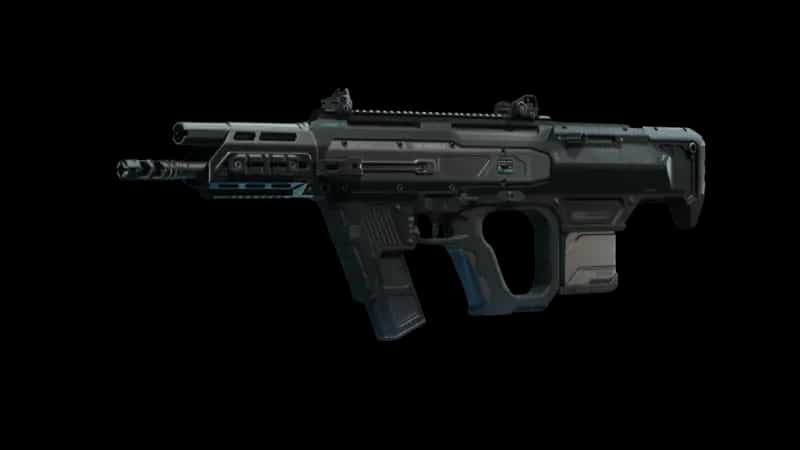
DS 20 Mirage - New Meta (Sniper Support) Loadout Warzone Season 5
MODS
GUIDE
Best DS 20 Mirage Loadout for Warzone: A Reliable Mid-Range Build
The DS 20 Mirage earns its place in Warzone by offering the kind of controlled, dependable performance that becomes increasingly valuable as fights stretch beyond close quarters. It may not be built around frantic movement or instant point-blank eliminations, but give it a clear sightline and enough room to settle into its firing rhythm, and it becomes a convincing option for players who value accuracy over aggression.
This configuration sharpens the weapon’s strengths without turning it into an awkward, overly heavy specialist. Better recoil management, cleaner target acquisition and a larger ammunition reserve make the DS 20 Mirage particularly effective during rooftop exchanges, open rotations and sustained squad fights. It suits a deliberate player who likes to hold useful angles, punish exposed opponents and support teammates from a controlled position.
Best Loadout
The best DS 20 Mirage loadout focuses on extending its effective reach while keeping the firing experience stable and predictable. Every attachment contributes to a build designed for repeatable accuracy rather than unpredictable bursts of speed.
| Attachment Slot | Selected Attachment |
|---|---|
| Muzzle | Monolithic Suppressor |
| Barrel | 17.1" Abdicator Barrel |
| Optic | Fang HoverPoint ELO |
| Underbarrel | VAS Convergence Foregrip |
| Magazine | Andean Extended Mag I |
Attachment Analysis
The Monolithic Suppressor and 17.1" Abdicator Barrel form the long-range foundation of this setup. The suppressor keeps your shots from immediately advertising your position while also complementing the weapon’s ranged performance. That matters in Warzone, where firing without suppression can turn one clean engagement into an invitation for every nearby squad to investigate. The Abdicator barrel gives the DS 20 Mirage a more authoritative feel across longer sightlines, helping its rounds reach distant targets more effectively and allowing damage to remain competitive outside typical assault-rifle territory.
Recoil control is handled largely by the VAS Convergence Foregrip, which helps the weapon remain composed during extended automatic fire. The DS 20 Mirage benefits more from consistent tracking than from short, nervous bursts, so reducing unwanted movement makes a noticeable difference when an opponent is running between cover or attempting to parachute away. Combined with the barrel, the foregrip creates a steadier firing platform that rewards careful centring and measured trigger discipline.
The Fang HoverPoint ELO provides a clean picture without adding excessive visual clutter. It is well suited to the practical ranges of this build: enough clarity to track enemies across roads and rooftops, but still comfortable when a fight moves closer than expected. Meanwhile, the Andean Extended Mag I gives the loadout enough capacity to pressure multiple targets, finish downed enemies and survive a missed sequence without immediately demanding a reload. The build inevitably gives up some mobility and close-range responsiveness, but those compromises are reasonable for a weapon intended to control medium and long-distance engagements.
Gameplay Tips
A useful way to approach the DS 20 Mirage is to think about where the fight will happen before firing the first shot. If an enemy is crossing open ground, I would let the reticle settle around the upper torso and begin shooting only when there is enough time to maintain the beam. Opening too early from an uncomfortable angle often produces a few armour hits and nothing else. This build is much more dangerous when the target has committed to a route and cannot instantly disappear behind cover.
Rooftops suit it particularly well, although I would avoid standing on the highest exposed edge for longer than necessary. Use an air-conditioning unit, parapet or chimney to limit the number of directions from which you can be challenged. The suppressor makes it harder for distant squads to identify you immediately, but it does not make you invisible. After securing a knock, shifting a few metres before peeking again is usually smarter than expecting the second opponent to walk into the same line of fire.
Inside buildings, the calculation changes quickly. If footsteps are already underneath the stairs or an SMG player has reached the doorway, I would switch to a close-range secondary rather than trying to force the Mirage through an unfavourable duel. Its sight picture is clean enough for emergencies, but this particular setup wants preparation. Pre-aiming a corridor is reasonable; sprinting around a corner and hoping to beat a dedicated close-range weapon is not.
The extended magazine creates room to apply squad pressure, but it can also encourage wasteful shooting. I prefer using the first part of the magazine to crack or down an exposed player, then keeping enough ammunition available for the teammate who inevitably swings from another angle. Reloading immediately after every elimination is a dangerous habit, especially in Resurgence, where another opponent may arrive before the animation finishes. A partial magazine with a strong position is often safer than a full one behind no cover.
During Battle Royale rotations, the Mirage works best when you move early enough to claim a position overlooking the next route. It is far easier to shoot a squad crossing a road than to return fire while you are the squad crossing it. In Resurgence, I would play closer to teammates and use the weapon to punish opponents who focus on the entry fragger. The extra magazine capacity is valuable amid that chaos, though staying on the same angle for too long will eventually bring grenades, streaks or a coordinated push.
One final temptation is chasing every cracked enemy. I would resist it unless the route is genuinely safe. The DS 20 Mirage can create excellent openings from distance, but abandoning cover to sprint after one damaged opponent may erase the advantage the weapon just gave you. Sometimes the best follow-up is simply holding the escape route and waiting for the target to make the next mistake.
Conclusion
This DS 20 Mirage build turns the weapon into a composed, flexible primary for players who prefer intelligent positioning and sustained accuracy. The combination of the Monolithic Suppressor, Abdicator barrel and Convergence foregrip makes ranged fire easier to control, while the Fang optic and extended magazine keep the setup practical during hectic squad engagements.
It will not replace an SMG in tight interiors, nor should it be treated like a lightweight rushing rifle. Used from strong cover with a suitable secondary, however, the DS 20 Mirage can dictate fights before opposing teams get close enough to impose their own pace.
PERKS & EQUIPMENT
- Drill Instructor
- Sprinter
- Adaptive
Equipment
- LethalSemtex
- TacticalStim Shot