Top Loadout TTK Long Range - AR - MK35 ISR
MODS
GUIDE
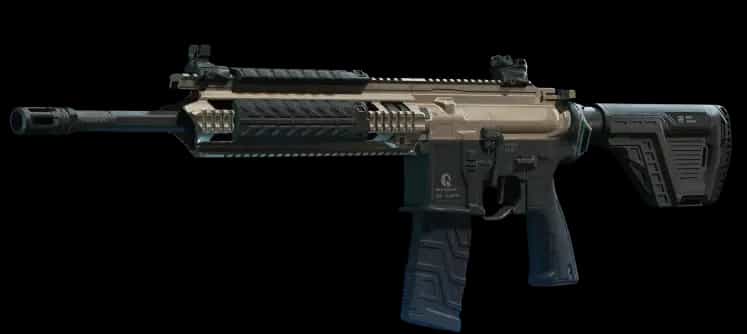
Best MK35 ISR Loadout in Warzone: A Suppressed Rifle Built for Control and Consistency
Some Warzone weapons reward aggressive movement and constant pressure. Others become much more dangerous when you slow the fight down, establish a strong position, and force opponents to challenge you on unfavorable terms. The MK35 ISR belongs firmly in the second category, particularly when equipped with attachments that prioritize recoil management, sustained fire, and reliable mid-range accuracy.
This MK35 ISR loadout focuses on turning the assault rifle into a dependable primary weapon for Battle Royale and Resurgence. Rather than chasing maximum mobility or an exceptionally fast aim-down-sight speed, the setup emphasizes controlled engagements, cleaner tracking, and enough magazine capacity to handle multiple opponents without constantly interrupting your pressure.
With the 16.5" Greaves Bellum Barrel, Monolithic Suppressor, and VAS Convergence Foregrip working together, the rifle is configured for players who prefer deliberate gunfights and predictable weapon handling. Add a clear optic and an extended drum magazine, and you have a build designed to punish exposed rotations and keep enemy squads pinned down.
Best Loadout
The following five attachments give the MK35 ISR a balanced configuration focused on recoil control, practical engagement range, and sustained damage output.
| Attachment Slot | Selected Attachment |
|---|---|
| Barrel | 16.5" Greaves Bellum Barrel |
| Optic | Fang HoverPoint ELO |
| Magazine | Bowen Siren Drum |
| Underbarrel | VAS Convergence Foregrip |
| Muzzle | Monolithic Suppressor |
Attachment Analysis
The foundation of this build is the combination of the 16.5" Greaves Bellum Barrel and Monolithic Suppressor. Together, they establish the MK35 ISR as a weapon intended for measured, medium-to-long-range engagements rather than frantic close-quarters exchanges. The longer barrel supports the rifle's ranged configuration, while the suppressor helps keep firing less conspicuous and complements a positioning-focused approach.
Suppressors are particularly valuable when engaging enemies who have not yet identified your location. A squad crossing between buildings might initially struggle to determine exactly where the shots are coming from, giving you an opportunity to secure an elimination or force opponents into cover before they can respond effectively. Suppression does not guarantee invisibility, however, especially when enemies can follow tracers or recognize the direction of incoming fire.
Recoil management receives additional attention through the VAS Convergence Foregrip. This attachment is selected to improve the rifle's controllability during sustained bursts, helping players maintain a steadier sight picture while tracking targets. That becomes especially relevant when shooting at opponents moving laterally across rooftops, roads, or open terrain.
The Fang HoverPoint ELO keeps the aiming experience relatively uncluttered. A clean sight picture is valuable on an assault rifle because visual distractions can make recoil corrections and target tracking more difficult. The optic also suits players who want a straightforward aiming solution without committing to the more restrictive feel of higher-magnification sights.
Finally, the Bowen Siren Drum provides the ammunition capacity that defines the build's squad-fighting potential. A larger magazine creates more opportunities to finish a damaged opponent, immediately transfer fire to a teammate, or maintain pressure while enemies attempt to reposition.
That extra ammunition comes with a practical consideration: a drum-oriented setup is not designed around maximum responsiveness. I would treat the MK35 ISR as a rifle that benefits from preparation and positioning, rather than expecting it to compete with dedicated SMGs during sudden point-blank encounters.
Gameplay Tips
One situation where I'd particularly want this MK35 ISR is defending a building while another squad attempts to rotate across the street. Instead of standing directly in a window and firing continuously, I'd hold an angle slightly farther inside, wait until an opponent commits to crossing, and then start shooting. The extended magazine gives me room to continue applying pressure if a second enemy follows.
There's a temptation to chase every opponent immediately after breaking their armor. With this build, I'd be more selective. If an enemy escapes behind a wall and their teammates are still nearby, rushing forward can surrender the positioning advantage that made the initial engagement successful. I'd rather keep the angle, watch for the next peek, and force the opposing squad to make the uncomfortable decision.
Moving targets deserve a little patience, too. When someone is sprinting across an exposed hillside, I'd concentrate on smooth tracking rather than trying to compensate for every small movement with aggressive mouse or stick adjustments. The foregrip and optic are there to support consistent aim, but no attachment can replace sensible target selection and controlled firing.
The biggest mistake would be treating the Bowen Siren Drum as permission to shoot endlessly. Having additional rounds available is useful, especially when multiple enemies appear together, but prolonged firing from an obvious position can invite return fire from several directions. I'd use the magazine capacity to maintain pressure when it matters, then reposition before opponents establish a reliable counter-angle.
Resurgence creates a different problem. Fights develop quickly, and an enemy who disappears around a corner might return with a teammate almost immediately. Here, I'd keep the MK35 ISR ready for exterior angles, rooftop engagements, and fights between nearby buildings. For cramped staircases or unpredictable room clears, a fast-handling secondary weapon would be my preferred option.
In Battle Royale, I'd lean more heavily into the rifle's patient side. Holding the edge of a safe-zone rotation, covering teammates while they cross exposed ground, or watching a likely enemy approach gives this configuration a clear purpose. The Monolithic Suppressor fits that approach, although I'd still change positions after a prolonged exchange rather than assuming opponents cannot locate me.
One small habit can make a considerable difference: reload before moving into a new position, not automatically after every elimination. If I still have enough ammunition to defend against another opponent, I'd first check whether the surrounding area is secure. A poorly timed reload can be far more dangerous than entering the next engagement with a partially depleted drum.
And when an SMG player suddenly appears three meters away, I wouldn't stubbornly commit to the MK35 ISR just because it's my primary weapon. I'd switch if possible, use nearby cover to interrupt their aim, or disengage through a doorway. Winning that encounter often depends less on the rifle's theoretical damage output and more on recognizing that the fight has moved outside the conditions this build was chosen for.
Conclusion
The MK35 ISR loadout in Warzone offers a compelling option for players who value predictable handling, sustained fire, and controlled engagements over pure movement speed.
The Greaves Bellum Barrel, Monolithic Suppressor, and VAS Convergence Foregrip establish a range-focused foundation, while the Fang HoverPoint ELO and Bowen Siren Drum make it easier to maintain visual clarity and pressure during extended squad fights.
It's a configuration worth trying if your preferred approach involves holding strong positions, supporting teammates, and punishing opponents who expose themselves during rotations. Give it a capable close-range secondary, avoid unnecessary challenges inside tight buildings, and let the MK35 ISR handle the engagements where preparation and accuracy matter most.
PERKS & EQUIPMENT
- Scavenger
- Sprinter
- Tempered
Equipment
- LethalCombat Axe
- TacticalStim Shot