Best MXR-17 - Loadout Booya
MODS
GUIDE
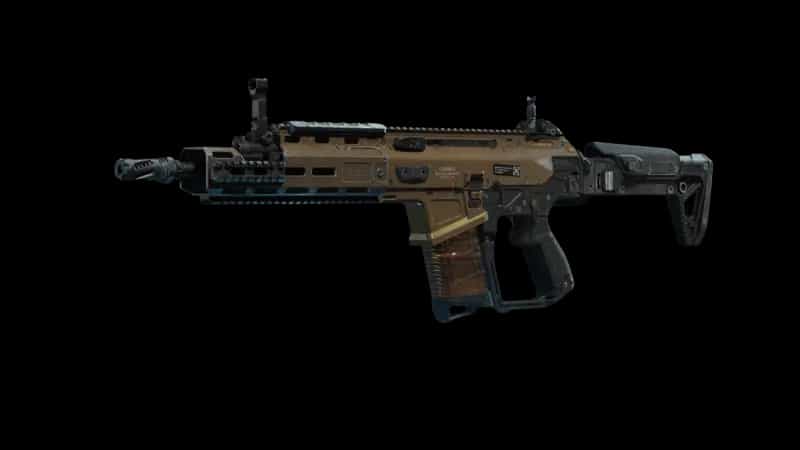
Best MXR-17 Loadout in Warzone: A Controlled Long-Range Build
The MXR-17 is the kind of Warzone weapon that rewards patience, clean positioning, and disciplined tracking rather than frantic movement. Built around strong ranged performance and dependable accuracy, it fits naturally into the hands of players who prefer controlling sightlines, punishing rotations, and taking calculated fights before an enemy squad can close the distance. With the right attachment combination, the MXR-17 becomes considerably easier to manage during sustained fire, which matters when you are trying to keep shots connected against armored targets moving through open terrain.
This setup leans heavily into that identity. Instead of trying to turn the MXR-17 into an aggressive close-range rifle, the build strengthens the characteristics that make it useful in the first place: recoil control, ranged consistency, visibility, bullet performance, and firing stability. It is particularly well suited to Battle Royale players who like occupying rooftops, hills, windows, or elevated positions, although it can also work effectively in Resurgence when paired with a faster secondary weapon.
Best Loadout
The goal here is straightforward: make the MXR-17 predictable enough to maintain pressure through medium and long-distance engagements without sacrificing the clear sight picture needed to track moving opponents.
| Attachment Slot | Selected Attachment |
|---|---|
| Barrel | 17" Greaves Scourge Barrel |
| Muzzle | Greaves TI-762 |
| Optic | Redwell 30-S 2x |
| Fire Mods | 7.62 NATO FMJ |
| Underbarrel | VAS Convergence Foregrip |
Attachment Analysis
The 17" Greaves Scourge Barrel establishes the foundation of the build by pushing the MXR-17 toward more consistent ranged engagements. A rifle like this benefits considerably from a barrel focused on keeping its performance stable once enemies move beyond comfortable assault-rifle distance. Combined with the 7.62 NATO FMJ ammunition modification, the setup becomes especially appealing for players who want their shots to remain threatening when opponents are attempting to retreat behind light cover or move between pieces of protection.
Recoil management is the other major priority. The Greaves TI-762 and VAS Convergence Foregrip work toward making sustained firing easier to control, reducing the amount of correction required once the weapon begins climbing or drifting during a burst. That matters more than raw theoretical damage when an opponent is 50 or 60 meters away. Missing several rounds because the sight is bouncing around wastes both ammunition and the opportunity to finish a vulnerable enemy. A calmer firing pattern lets you remain on target longer and makes follow-up shots much more reliable.
The Redwell 30-S 2x completes the configuration with a magnification level that matches the MXR-17's intended role without making the rifle feel excessively specialized. A high-powered optic can become awkward when a fight suddenly collapses into medium range, while an unmagnified sight can make distant tracking unnecessarily difficult. A 2x option sits comfortably between those extremes. It gives enough visual clarity for opponents crossing roads, moving between rooftops, or rotating through hills while still remaining usable when somebody appears significantly closer than expected.
There is a trade-off, of course. This is not a build designed around maximum ADS speed, sprint-to-fire performance, or aggressive mobility. Several attachment choices are dedicated to stability and ranged effectiveness, so the MXR-17 should be treated as a deliberate primary rather than a weapon for repeatedly slide-challenging players inside buildings. That specialization is actually one of the build's strengths: every attachment is helping the rifle perform the same job instead of pulling it in several different directions.
Gameplay Tips
One habit I'd adopt immediately with this MXR-17 is pre-aiming the places enemies are likely to appear instead of reacting after they are already shooting. Imagine holding the edge of a rooftop while another squad rotates across a road below. I would rather have the 2x optic positioned on the next piece of cover than constantly scan around at maximum speed. When an opponent breaks into the open, the rifle gives you enough control to track the movement and keep pressure on them instead of fighting the recoil after the first few rounds.
I also wouldn't chase every cracked enemy. That temptation gets people killed with slower, range-oriented setups. If somebody takes heavy damage at distance and disappears behind a wall, pushing 70 meters through exposed ground just to secure one elimination can throw away the advantage this build gave you. I'd keep the angle, watch for the revive or reposition, and force the opposing squad to make the uncomfortable move. The MXR-17 is much more convincing when the fight comes back into your sightline than when you sprint into an SMG player waiting behind a doorway.
Things change when a squad starts collapsing on your building. The moment footsteps are directly below or somebody reaches the staircase, I would already be thinking about my secondary. The MXR-17 can survive a medium-range surprise, but I wouldn't expect this configuration to compete comfortably with a dedicated close-range weapon during a frantic room-to-room fight. If there is enough space, reposition to another floor, balcony, or adjacent roof and rebuild the distance. Ten extra meters can completely change how comfortable the engagement feels.
Resurgence encourages more frequent fighting, so I'd play the rifle slightly more aggressively there without pretending it is an SMG. Holding a neighboring rooftop while teammates pressure a building is a good example. You can punish players who jump from windows, challenge enemies peeking the roofline, and stop opponents from crossing toward your squad. In Battle Royale, I'd be more selective and preserve ammunition during long-range exchanges that are unlikely to produce a knock. There is little value in emptying repeated bursts into somebody who can instantly disappear behind a ridge.
The small detail I'd keep thinking about is what happens after the first knock. With a controlled rifle, it is easy to become fixated on finishing the downed player because the target is sitting conveniently in your scope. I would check for the teammate first. Squads often expose themselves for a revive or swing the same angle expecting you to be distracted. Keeping the sight slightly wider and waiting another second can turn one knock into control of the entire fight.
Conclusion
This MXR-17 configuration is built for players who want their rifle to feel composed when engagements stretch beyond ordinary close-to-mid-range distances. The combination of the 17" Greaves Scourge Barrel, Greaves TI-762, VAS Convergence Foregrip, Redwell 30-S 2x, and 7.62 NATO FMJ gives the weapon a clear purpose: hold angles, track targets cleanly, and maintain meaningful pressure across open spaces.
It will not be the first weapon I'd choose for charging blindly through a staircase, but that is not what makes this setup interesting. Pair it with a dependable close-range secondary, give yourself room to work, and the MXR-17 becomes the kind of rifle that can make an enemy rotation feel like a very bad decision.
PERKS & EQUIPMENT
- Scavenger
- Sprinter
- Tempered
Equipment
- LethalCombat Axe
- TacticalStim Shot