Meta Loadout Ranked for MXR-17 (tested by pro player)
MODS
GUIDE
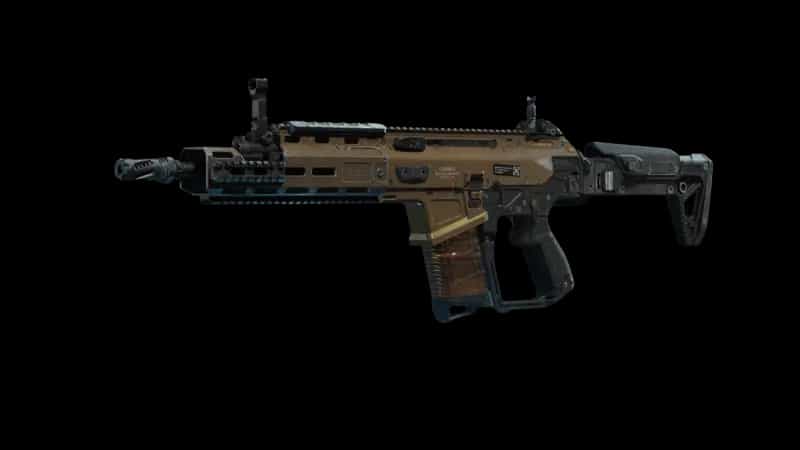
Best MXR-17 Loadout for Warzone: A Stable Mid-to-Long Range Build
The MXR-17 is the kind of Warzone rifle that rewards patience more than reckless aggression. With the right setup, it becomes a dependable option for players who prefer controlling sightlines, punishing rotations, and taking disciplined fights rather than constantly forcing themselves into point-blank engagements. This build leans heavily into that identity, improving the weapon’s composure under sustained fire while giving it the velocity and visual clarity needed to challenge enemies across streets, rooftops, and open terrain.
What makes this configuration interesting is that it does not waste attachment slots trying to turn the MXR-17 into something it is not. Instead of chasing maximum mobility, the 17" Greaves Scourge Barrel, Monolithic Suppressor, and VAS Convergence Foregrip build a strong firing platform, while the Redwell 30-S 2x gives the rifle a comfortable magnification level for the distances where it feels most convincing. Adding 7.62 NATO FMJ rounds completes a setup designed around deliberate pressure and reliable ranged engagements.
Best Loadout
This MXR-17 configuration is aimed at players who want a controlled primary weapon for medium and longer sightlines. It sacrifices some of the snappy handling associated with aggressive assault-rifle setups, but the payoff is a rifle that feels far more settled when you need to stay on target through an extended burst.
| Attachment Slot | Selected Attachment |
|---|---|
| Barrel | 17" Greaves Scourge Barrel |
| Muzzle | Monolithic Suppressor |
| Underbarrel | VAS Convergence Foregrip |
| Optic | Redwell 30-S 2x |
| Fire Mods | 7.62 NATO FMJ |
Attachment Analysis
The core of the build is the relationship between the Greaves Scourge Barrel, Monolithic Suppressor, and VAS Convergence Foregrip. Together, they push the MXR-17 toward a steadier, more predictable firing pattern, which matters far more once opponents are far enough away that even small deviations can throw several rounds off target. Rather than fighting the rifle during every burst, you can concentrate on maintaining upper-body tracking and making small corrections as an enemy changes direction.
The barrel and muzzle also suit the MXR-17's role as a ranged primary by supporting stronger ballistic performance. Better velocity is particularly useful when firing at players sprinting between pieces of cover, because you do not have to compensate as aggressively for the delay between pulling the trigger and the rounds reaching the target. The suppressor adds another tactical benefit: being less obvious when opening fire is valuable when you are holding a strong position and do not want every nearby squad immediately identifying where the shots came from.
The Redwell 30-S 2x fits neatly into that philosophy. A low-magnification optic can feel limiting once engagements stretch across large open spaces, while excessive zoom can make the rifle awkward when somebody suddenly appears much closer. A 2x sight sits in a useful middle ground. It gives you enough visual detail to track movement at range without making every 25-meter engagement feel claustrophobic.
Finally, 7.62 NATO FMJ reinforces the build's pressure-oriented character. It is particularly useful when enemies are trying to exploit light cover or when you are repeatedly firing into positions where opponents are ducking in and out of sight. The complete setup is therefore less about raw movement speed and more about consistency: cleaner tracking, stronger ranged control, useful suppression, and a sight picture that matches the MXR-17's preferred engagement window.
Gameplay Tips
One habit I would develop with this MXR-17 is pre-aiming before the opponent fully appears. Imagine a player rotating from a building toward a concrete wall across the street. I would already have the Redwell positioned near the edge of that cover rather than trying to snap onto the target after they start sprinting. The weapon has enough stability to reward that kind of anticipation, and it is much easier to maintain pressure when your first bullets are already landing.
Rooftops are another place where I like the logic of this setup. You can watch several approaches without needing extreme magnification, then immediately shift to another angle if a squad begins climbing or crossing beneath you. I would resist the temptation to keep shooting indefinitely at someone disappearing behind hard cover, though. A few seconds spent repositioning to another rooftop angle can be worth much more than emptying rounds into a position the enemy is already prepared to defend.
The uncomfortable moment comes when somebody closes the gap fast. If an SMG player flies through a doorway while you are still using the 2x optic, trying to force the MXR-17 through that fight can turn into a bad gamble. I would rather switch to a close-range secondary early than wait until the opponent is practically touching me. The same applies after cracking someone inside a building: chasing automatically is not always the correct decision. If the MXR-17 gave me the advantage from outside, I would often keep that advantage instead of surrendering it by charging into a staircase.
Moving targets are where controlled firing matters most. When somebody is sprinting across exposed ground, I would avoid wildly dragging the reticle after every change of direction. Keep the movement smooth, lead slightly when necessary, and let the rifle's stability do some of the work. If the enemy reaches cover with only a few bullets left in your magazine, reload before trying to force the next angle. Getting caught halfway through a second engagement with a nearly empty weapon is one of those avoidable mistakes that gets much more expensive in squad fights.
In Battle Royale, I would treat this as a rotation and position-control weapon. Take ground early, watch likely crossings, and make other teams uncomfortable whenever they have to move through exposed areas. Resurgence allows a little more aggression because fights reset faster, but even there I would not suddenly turn this into a doorway-clearing rifle. If a cracked player dives behind cover ten meters away, the question running through my head is not simply whether I can chase them; it is whether chasing means giving up the range where the MXR-17 was already winning the fight.
Conclusion
This MXR-17 loadout gives Warzone players a composed, purpose-built rifle for controlling medium and long-range engagements. The Greaves Scourge Barrel, Monolithic Suppressor, and VAS Convergence Foregrip create the stable foundation, while the Redwell 30-S 2x keeps distant targets readable without making the weapon overly specialized. With 7.62 NATO FMJ supporting sustained pressure, the finished build feels best in the hands of someone who values positioning and controlled fire over frantic movement.
It is not the setup I would choose for repeatedly crashing through buildings, and that is exactly why it works. Give the MXR-17 space, choose your angles before firing, and make opponents cross ground on your terms. In those situations, this configuration has everything it needs to become a reliable anchor for a Warzone loadout.
PERKS & EQUIPMENT
- Field Medic
- Sprinter
- Tempered
Equipment
- LethalSemtex
- TacticalStim Shot