MXR-17 - Loadout DiazBiffle for Warzone Ranked
MODS
GUIDE
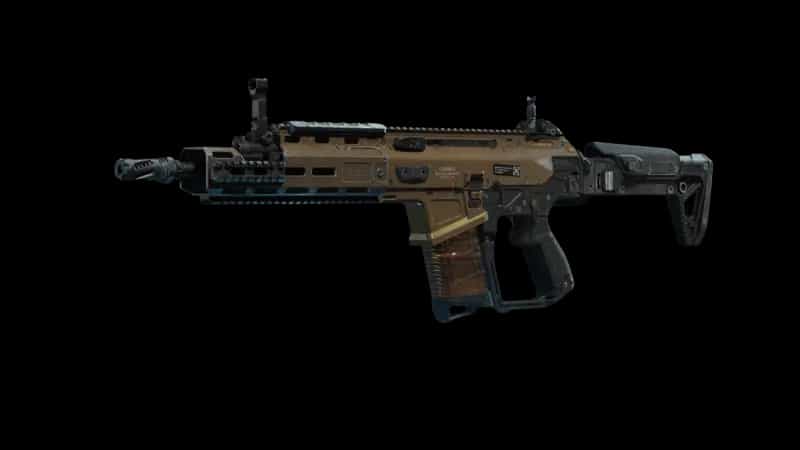
Best MXR-17 Loadout for Warzone: A Suppressed Mid-to-Long-Range Build
The MXR-17 is the kind of Warzone weapon that rewards patience more than panic. Built around 7.62 ammunition and a heavier handling profile, it makes the most sense when you are controlling lanes, punishing rotations, and forcing opponents to fight through your preferred sightline rather than chasing every cracked plate into a building. With the right attachments, its recoil becomes far easier to manage without stripping away the range and consistency that make the rifle appealing in the first place.
This setup leans firmly into that identity. The combination of a long barrel, suppressor, recoil-focused foregrip, FMJ ammunition, and a clean 2x optic creates an MXR-17 designed for controlled medium-to-long-range engagements. It is not a hyper-aggressive build for flying through doorways. Instead, it suits Battle Royale players who value positioning and Resurgence players who want a dependable rifle for rooftop fights, cross-building pressure, and enemies trying to rotate between pieces of cover.
Best Loadout
Rather than trying to make the MXR-17 behave like a lightweight assault rifle, this configuration reinforces what the weapon already does well. The emphasis is on stable sustained fire, comfortable target acquisition, and reliable performance once fights stretch beyond typical SMG distance.
| Attachment Slot | Selected Attachment |
|---|---|
| Barrel | 17" Greaves Scourge Barrel |
| Fire Mods | 7.62 NATO FMJ |
| Muzzle | Monolithic Suppressor |
| Optic | Redwell 30-S 2x |
| Underbarrel | VAS Convergence Foregrip |
Attachment Analysis
The 17" Greaves Scourge Barrel establishes the foundation of the build by pushing the MXR-17 toward the ranges where a 7.62 rifle is most comfortable. Paired with the Monolithic Suppressor, it gives the weapon a more deliberate ranged character while adding the obvious tactical benefit of suppressed fire. In Warzone, staying less conspicuous while repeatedly challenging a distant squad can matter almost as much as raw recoil numbers. You can apply pressure without advertising every shot quite as aggressively to nearby teams looking for an easy third party.
Recoil management is where the VAS Convergence Foregrip becomes particularly valuable. A magnified optic exposes every unnecessary movement in the weapon, so stability matters more here than it would on a close-range build using a simple reflex sight. The foregrip helps keep sustained bursts composed enough to remain useful when an opponent is moving laterally across a rooftop or trying to sprint from one rock to another. Instead of constantly correcting the reticle after the opening bullets, the setup encourages smoother tracking.
The Redwell 30-S 2x is also a sensible compromise. There is enough magnification to identify and follow targets across longer sightlines, but it does not turn the MXR-17 into an awkward pseudo-sniper. That distinction matters when a fight suddenly compresses from a distant hillside into the next building over. You still retain a usable field of view and can transition between enemies without feeling trapped behind excessive zoom.
Finally, 7.62 NATO FMJ complements the build's role as a pressure weapon. It fits naturally with a rifle intended to challenge enemies around cover and keep squads uncomfortable during rotations. Taken together, these attachments produce a heavier, steadier MXR-17 that sacrifices some immediacy in exchange for better control and greater confidence when you have time to establish your aim.
Gameplay Tips
One mistake I'd avoid with this MXR-17 is treating every cracked enemy as an invitation to sprint forward. If I break someone crossing between two buildings, my first thought is usually about the rest of their squad. Keep the angle, watch for the teammate trying to cover the retreat, and force them to spend resources recovering. This build is much better at making a team uncomfortable from distance than it is at rescuing you after an overconfident push through a doorway.
Moving targets are where the 2x optic earns its place. Picture an opponent rotating across open ground toward a low wall: I'd rather track smoothly and keep the burst controlled than dump the entire magazine while dragging the sight behind them. The MXR-17 rewards small corrections. If the enemy reaches cover with one plate left, that is still valuable pressure; you do not need every engagement to end with an immediate down.
Rooftops and elevated windows are particularly useful positions. From there, the suppressed setup lets you challenge players below without turning every nearby squad's attention toward you quite as quickly. I would still change angles after sustained shooting, though. Warzone players react fast to repeated fire, tracers, and teammates calling out your position. Shoot from one edge of the roof, disappear for a moment, then reappear several metres away rather than becoming an easy pre-aim.
Inside buildings, I would be much less stubborn. If an SMG player suddenly appears at the bottom of a staircase, the MXR-17 is not the weapon I'd want to force into that duel unless I am already aimed in. A fast secondary makes a huge difference here. There is no prize for proving that your long-range rifle can survive a five-metre gunfight.
Resurgence makes that decision even more important because pressure arrives so quickly. I would use the MXR-17 to punish enemies landing back in, challenge neighboring roofs, and hold the lanes between buildings, then swap weapons before pushing a cramped interior. In Battle Royale, I can afford to play it more patiently and use terrain, rocks, walls, and elevation to create repeatable firing positions during rotations.
A small habit matters with this type of rifle: don't stay exposed just because the sight picture feels good. Fire, get information, plate if necessary, and reset. The MXR-17 becomes much more dangerous when you make enemies challenge your angle twice than when you stand in the same window trying to win one extended exchange.
Conclusion
This MXR-17 setup gives Warzone players a disciplined, suppressed rifle build aimed at controlling medium and longer sightlines. The 17" Greaves Scourge Barrel, Monolithic Suppressor, VAS Convergence Foregrip, Redwell 30-S 2x, and 7.62 NATO FMJ all pull in the same direction: cleaner tracking, steadier engagements, and more confidence when opponents are moving through exposed territory.
It will not replace an SMG when a fight collapses into a staircase or tiny room, and that is perfectly fine. Pair it with something quick, respect its handling, and use the MXR-17 to dictate fights before enemies ever get close enough to make that weakness matter.
PERKS & EQUIPMENT
- Mountaineer
- Sprinter
- Tempered
Equipment
- LethalSemtex
- TacticalStim Shot