MXR-17 - Loadout JKucci
MODS
GUIDE
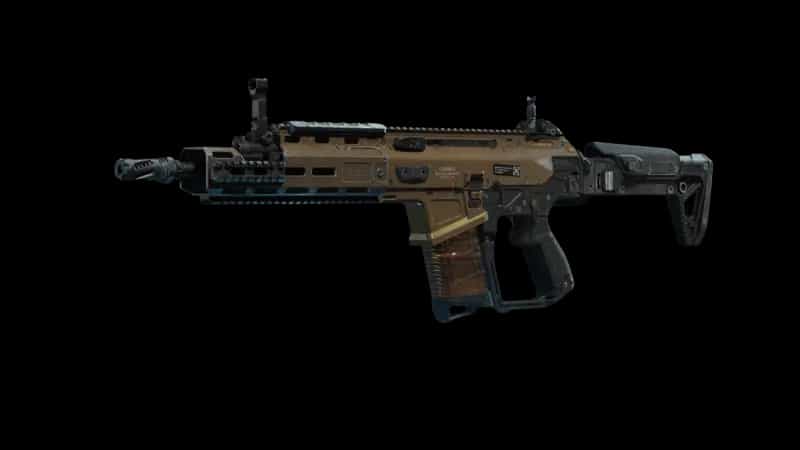
Best MXR-17 Loadout for Warzone: A Stable 7.62 Build for Mid-to-Long Range
The MXR-17 is the kind of Warzone rifle that rewards controlled aggression rather than constant rushing. Its 7.62 platform gives it the presence you want when challenging enemies across rooftops, streets, hillsides, and open rotations, but the weapon becomes much more convincing once its recoil and firing stability are brought under control. This setup focuses heavily on that side of the gun, turning the MXR-17 into a dependable primary for players who prefer to dictate fights from advantageous positions instead of chasing every close-range engagement.
There is also something appealing about a build that does not waste an attachment slot on an optic or extended magazine. The standard sight picture becomes part of the trade-off, while the available slots are committed to weapon behavior: recoil management, stability, effective ranged performance, and more consistent shots against armored targets. It suits Battle Royale especially well, although disciplined Resurgence players can also make good use of it when holding power positions and controlling approaches.
Best Loadout
This configuration is built around keeping the MXR-17 composed during sustained fire. Rather than trying to transform it into a lightweight assault rifle, the attachments lean into the weapon's natural role as a harder-hitting ranged option.
| Attachment Slot | Selected Attachment |
|---|---|
| Barrel | 17" Greaves Scourge Barrel |
| Muzzle | Greaves TI-762 |
| Fire Mods | 7.62 NATO FMJ |
| Underbarrel | VAS Convergence Foregrip |
| Stock | Winch Stock |
Attachment Analysis
The 17" Greaves Scourge Barrel gives this setup its ranged foundation. On a rifle such as the MXR-17, a barrel choice should help preserve effectiveness once the target moves beyond comfortable assault-rifle distance, and this option complements the build's emphasis on longer sightlines. Combined with the 7.62 NATO FMJ ammunition modification, the rifle feels oriented toward maintaining pressure rather than simply winning a quick snap fight. FMJ is particularly useful when enemies attempt to disappear behind light cover, allowing the MXR-17 to remain threatening even when a clean target becomes partially obscured.
Recoil management comes from stacking several complementary components instead of relying on one attachment to do everything. The Greaves TI-762 muzzle and VAS Convergence Foregrip give the rifle a more controlled firing profile, which matters when tracking a player across an exposed road or continuing to fire after breaking armor. The MXR-17 benefits enormously from predictable movement because its value comes from landing repeated accurate rounds. A weapon with strong damage potential means little if half the magazine climbs around the target during a sustained burst.
The Winch Stock completes that stability-focused approach. With the stock, foregrip, and muzzle all supporting control, the MXR-17 becomes more comfortable when firing from prepared positions or challenging enemies at medium-to-long distance. There is a cost, however: this is not a mobility-first configuration. ADS transitions and aggressive movement are not the central priority, so trying to force the rifle into cramped indoor fights wastes much of what the setup does well. The payoff is a weapon that feels much more deliberate when you have time to shoulder it, settle the reticle, and keep pressure on a target.
Gameplay Tips
One habit I'd build around this MXR-17 is pre-aiming before the fight actually starts. Imagine rotating toward the next zone and spotting a team leaving a compound 70 or 80 meters away. I would rather get behind a rock, window frame, low wall, or rooftop edge and establish my angle before firing. The first few rounds matter because once an opponent starts slide-canceling between cover points, correcting aim becomes harder. With this build, I'd treat positioning as part of the weapon rather than expecting raw mobility to rescue a bad challenge.
The lack of an extended magazine changes how I would handle squad pressure. I wouldn't casually dump rounds into every silhouette I see, especially in trios or quads. Breaking one enemy and immediately burning the rest of the magazine through a wall can leave you reloading exactly when his teammates swing. FMJ makes shooting through penetrable cover tempting, but I would use it selectively: finish a cracked player who ducks behind a thin obstacle, or punish someone who keeps repeeking the same window. There is no reason to turn useful penetration into uncontrolled ammunition consumption.
Moving targets are where the build's stability becomes valuable. If an enemy is sprinting across open ground, I'd avoid frantic micro-corrections and instead keep the reticle moving smoothly through their path. The rifle should be allowed to work through sustained tracking. The mistake would be repeatedly stopping and restarting your aim every time a bullet misses. Controlled follow-through is much more effective, particularly when the target has nowhere substantial to hide.
Inside buildings, my decisions would be almost the opposite. If an SMG player suddenly appears at the bottom of a staircase, I wouldn't want to pretend the MXR-17 is built for that duel. Unless the opponent is already weakened, switching to a dedicated close-range secondary is usually the cleaner answer. Likewise, chasing a cracked enemy blindly through three rooms can throw away the range advantage you created outside. I'd rather cover the exit, reposition to another doorway, or let a teammate force the close-range interaction.
Battle Royale gives this setup room to breathe. Late rotations across exposed areas, hillside fights, rooftop control, and teams moving between compounds all provide the sort of engagements I want. Resurgence requires a little more restraint because threats appear from multiple directions and fights collapse into short distances much faster. On a busy rooftop, for example, I'd use the MXR-17 to punish players flying back in or moving across adjacent buildings, but the moment footsteps reach the staircase, I'm already thinking about the secondary weapon.
One small decision can make a big difference with this rifle: don't automatically chase every armor break. A cracked opponent running behind a wall often wants you to abandon your cover and follow. With the MXR-17, I'd usually hold the angle for another second, watch for the teammate attempting to trade, and only move once the situation is clearer. The weapon is much more dangerous when the enemy has to enter your sightline than when you're sprinting into theirs.
Conclusion
This MXR-17 loadout gives Warzone players a composed, range-focused rifle built around recoil control, firing stability, and sustained pressure. The Greaves Scourge Barrel, Greaves TI-762, VAS Convergence Foregrip, Winch Stock, and 7.62 NATO FMJ all push the weapon toward deliberate medium- and long-range engagements rather than frantic close-quarters fights.
It is a setup for players who are comfortable letting positioning create the advantage before pulling the trigger. Keep a capable close-range secondary nearby, resist unnecessary pushes, and the MXR-17 can become an excellent weapon for controlling rotations and punishing enemies who spend too long away from solid cover.
PERKS & EQUIPMENT
- Mountaineer
- Sprinter
- Tempered
Equipment
- LethalCombat Axe
- TacticalStim Shot