TR51-Para - Loadout with Fang Hoverpoint
MODS
GUIDE
Best TR51-Para Loadout for Warzone: A Reliable All-Range Build
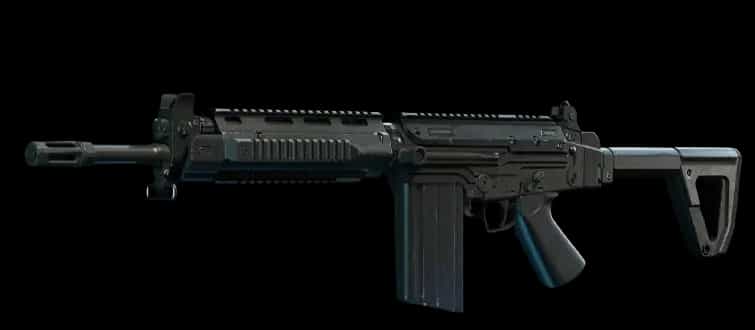
The TR51-Para is a compelling Warzone option for players who value accuracy, controlled pressure, and consistency across medium-to-long-range engagements. It is not designed to overwhelm opponents through raw aggression alone. Instead, the weapon rewards smart positioning, measured bursts, and the ability to keep shots on target while an enemy is moving between cover. With the correct attachments, its manageable handling can be shaped into a dependable primary weapon for both Battle Royale and Resurgence.
This setup focuses on making the TR51-Para more stable without turning it into an excessively slow rifle. The suppressor keeps your firing position concealed, while the barrel and foregrip provide the control needed to challenge opponents beyond typical assault-rifle distances. A clean optic and larger magazine complete a build capable of holding rooftops, supporting teammates, and dealing with multiple enemies before a reload becomes necessary.
Best Loadout
The following combination strengthens the TR51-Para’s ranged performance and recoil control while preserving enough responsiveness for regular Warzone engagements:
| Attachment Slot | Selected Attachment |
|---|---|
| Muzzle | Monolithic Suppressor |
| Barrel | 17" VAS Orsino Barrel |
| Optic | Fang HoverPoint ELO |
| Underbarrel | VAS Convergence Foregrip |
| Magazine | Carus Capacity Mag |
Attachment Analysis
The Monolithic Suppressor and 17" VAS Orsino Barrel form the foundation of this loadout. Together, they push the TR51-Para toward the role of a controlled ranged primary, improving its ability to maintain effective damage and reliable projectile performance across open sections of the map. Staying off the minimap is also enormously valuable when applying pressure from a rooftop, window, or distant piece of cover. You can fire several bursts, force an opponent to use plates, and make your next move without immediately broadcasting your exact position to every nearby squad.
Recoil management comes primarily from the VAS Convergence Foregrip, which helps settle the weapon during sustained fire. The TR51-Para is far more dangerous when its initial accuracy carries through the rest of the magazine, particularly against targets sprinting across roads or climbing onto rooftops. Combined with the heavier barrel, the foregrip reduces the need for constant correction and makes longer bursts more practical. The trade-off is a build that feels more deliberate than snappy, so it performs best when the player is already prepared for the engagement.
The Fang HoverPoint ELO keeps the sight picture clear without adding unnecessary visual obstruction. That matters when tracking an enemy through railings, foliage, smoke edges, or the clutter surrounding urban rooftops. Meanwhile, the Carus Capacity Mag gives the rifle enough ammunition to pressure a squad rather than merely winning one isolated duel. A larger magazine can slightly affect handling, but the extra rounds are worth the cost when a downed opponent’s teammate appears before there is time to reload.
These attachments produce a versatile weapon, but versatility should not be confused with perfect performance everywhere. The setup sacrifices some ADS and sprint-to-fire responsiveness to gain suppression, range, recoil control, and sustained fighting power. It remains comfortable through most conventional assault-rifle engagements, yet it is noticeably less forgiving when an aggressive SMG player reaches the same room. Pairing it with a fast secondary weapon creates a far more complete loadout.
Gameplay Tips
I’d treat this TR51-Para as a weapon for controlling the next piece of cover rather than chasing every damaged opponent. Imagine seeing a player rotate from a low wall toward a building entrance: the stable recoil gives you time to track the entire crossing, and the extended magazine lets you continue firing if a teammate follows. Once the target reaches cover, however, I wouldn’t automatically sprint after them. Hold the angle, watch for the revive, and make the opposing squad spend resources while you retain the stronger position.
The build also feels suited to layered rooftop fights. Instead of standing on the highest exposed point, I’d work from behind a parapet or use a staircase entrance as protection, briefly mounting or pre-aiming whenever movement appears below. The suppressor makes repeated pressure harder to trace immediately, but remaining in the same window for too long is still asking to be sniped. Fire, break line of sight, then reopen the angle from another part of the roof.
A squad forcing its way into your building creates a very different problem. The TR51-Para can handle the first player if you are already aiming at the doorway, but its heavier configuration is less comfortable when you must snap between targets at arm’s length. I’d pre-aim the likely entry route, secure the opening damage, and swap to an SMG rather than trying to force the rifle through an awkward close-range fight. If the push arrives from several entrances, backing up to create a longer lane is usually better than holding the center of the room.
In Battle Royale, this setup has enough control for disciplined rotations and late-circle crossfires. I’d conserve ammunition by using short bursts against distant targets unless there is a realistic chance of securing the elimination. Resurgence allows more aggression, although the same principle applies: pressure enemies while they are separated, reload behind cover, and avoid arriving at the next fight with only a handful of rounds left. The Carus Capacity Mag is generous, but sustained squad pressure can empty it surprisingly quickly.
One habit matters more than squeezing every possible meter from the rifle: begin aiming before the opponent fully leaves cover. The build is strong at tracking movement once the gun is settled, yet less impressive when forced into a sudden reaction shot. If an enemy is about to cross a street, I’d place the reticle near the expected route and let them move into it. That small decision often separates a clean down from watching a cracked target disappear around the next corner.
Conclusion
This TR51-Para Warzone loadout turns the weapon into a composed, suppression-friendly primary with the accuracy and magazine capacity required for squad-based engagements. The Monolithic Suppressor preserves discretion, while the VAS Orsino Barrel and Convergence Foregrip make ranged bursts considerably easier to manage. Add the unobstructed Fang HoverPoint ELO and Carus Capacity Mag, and the result is a rifle built for thoughtful positioning rather than reckless rushing. Give it space to settle, choose your angles early, and the TR51-Para can quietly dictate the pace of a fight.
PERKS & EQUIPMENT
- Drill Instructor
- Sprinter
- Adaptive
Equipment
- LethalSemtex
- TacticalStim Shot