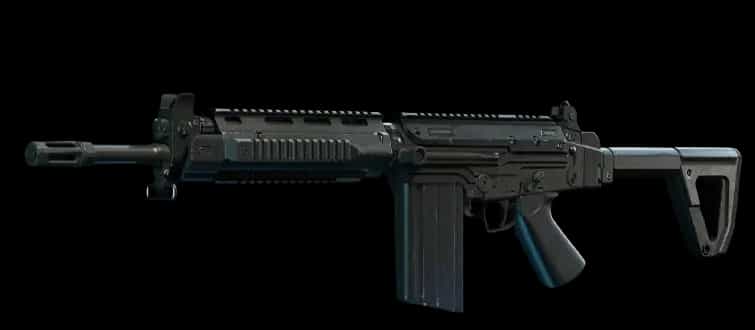
Top Assault AR for Warzone - TR51 Para (12/10)
MODS
GUIDE
Best TR51 Para Loadout in Warzone: A Powerful Build for Mid-Range Domination
The TR51 Para is a compelling option in Call of Duty: Warzone for players who prefer controlled, deliberate gunfights over constantly rushing into close-quarters engagements. With the right attachments, this weapon can become a reliable choice for challenging enemies across streets, defending elevated positions, and maintaining pressure on squads attempting to rotate through exposed areas.
What makes the TR51 Para particularly interesting is its potential as a versatile primary weapon. Rather than building entirely around aggressive movement or maximum long-distance accuracy, this setup focuses on creating a comfortable balance between recoil management, sustained fire, and target acquisition. That combination is especially valuable in Warzone, where a single engagement can quickly develop into a prolonged fight against multiple opponents.
The following TR51 Para loadout prioritizes consistency and practical combat effectiveness, using five attachments designed to complement one another without forcing the weapon into an overly specialized role.
Best Loadout
For this configuration, the objective is straightforward: improve the TR51 Para's handling during sustained engagements while preserving its usefulness across the distances commonly encountered in Battle Royale and Resurgence.
| Attachment Slot | Selected Attachment |
|---|---|
| Magazine | Carus Capacity Mag |
| Underbarrel | VAS Convergence Foregrip |
| Barrel | 18.5" MFS Fallen Angel Barrel |
| Muzzle | Monolithic Suppressor |
| Optic | Fang HoverPoint ELO |
The combination emphasizes recoil consistency, effective ranged engagements, and ammunition capacity, giving the TR51 Para a practical foundation for players who want a dependable primary weapon.
Attachment Analysis
The 18.5" MFS Fallen Angel Barrel establishes the ranged focus of this configuration. A barrel selected for longer engagements complements a weapon intended to challenge opponents beyond typical SMG distances. Its value lies in supporting a more deliberate shooting style, where maintaining accuracy throughout a burst matters more than shaving every possible fraction of a second off weapon handling.
Paired with the Monolithic Suppressor, the barrel creates a setup oriented toward controlled engagements and less conspicuous positioning. Suppression is particularly useful when attacking from rooftops, windows, or concealed angles because it can make your firing position harder to identify immediately. That does not mean enemies will struggle to locate you indefinitely, but it gives you another advantage when choosing how and when to reveal your position.
Recoil management receives additional attention through the VAS Convergence Foregrip. Keeping successive shots close to the intended target becomes increasingly important when fighting armored opponents, especially if they begin strafing or retreating behind cover. A steadier firing experience helps reduce the number of corrections needed during an engagement, allowing you to concentrate on enemy movement rather than constantly fighting the weapon.
The Fang HoverPoint ELO provides a clean sight picture without introducing the visual complexity of a magnified optic. This choice suits the TR51 Para's intended engagement profile: medium-distance gunfights where tracking movement and quickly switching between targets are often more useful than extreme magnification. Its relatively simple presentation also makes it a sensible option for fighting around buildings, where targets can appear unexpectedly.
Finally, the Carus Capacity Mag addresses one of the most frustrating situations in Warzone: running out of ammunition immediately after breaking an opponent's armor. Additional magazine capacity gives you greater flexibility when a second enemy appears or when a downed opponent needs to be finished before a revive. The trade-off with a larger magazine can involve handling or reload characteristics, so this configuration should be treated as a controlled, sustained-fire build rather than an ultra-lightweight rushing setup.
Taken together, these attachments favor predictable weapon behavior and fewer interruptions during combat. The emphasis is not on maximizing sprint-to-fire speed or producing the fastest possible ADS response. Instead, the build rewards good positioning, early target acquisition, and maintaining accurate fire once a fight begins.
Gameplay Tips
One situation where I'd confidently bring out this TR51 Para is when a squad starts moving between two buildings with limited cover. Rather than immediately firing at the first enemy I see, I'd wait until I have a clear angle on someone committed to crossing the open space. Landing the opening shots is valuable, but having enough ammunition to keep pressure on that player as they scramble toward safety can be even more useful.
I'd also resist the temptation to hold the trigger continuously whenever an opponent appears at a considerable distance. Even with a recoil-focused configuration, long bursts can become inefficient against small or rapidly moving targets. Short, controlled bursts give you a better opportunity to correct your aim, particularly when someone changes direction halfway through a rotation. Against a target moving laterally, I'd prioritize smooth tracking over frantic adjustments.
Buildings introduce a different problem. Imagine you're holding the second floor while two enemies push through the ground-level entrance. The TR51 Para can cover a staircase or hallway effectively if you're already aiming toward the likely entry point. However, I wouldn't want to be caught sprinting around a tight corner against an aggressive SMG player. The way I'd handle that situation is to establish distance before the fight starts, using doorways and longer interior sightlines rather than challenging someone at point-blank range.
There's also a strong argument for using this setup as a supporting weapon during squad engagements. If a teammate is pushing a damaged opponent, I'd rather maintain an angle on the enemy's escape route than abandon my position to join the chase. The Carus Capacity Mag provides room for continued pressure, and the relatively uncomplicated optic helps when shifting attention between a fleeing opponent and their teammates.
Resurgence encourages frequent repositioning, but that doesn't mean every armor break deserves an immediate push. I'd be particularly careful when firing from a rooftop overlooking several adjacent buildings. Breaking someone's plates is satisfying, yet dropping into an unfamiliar room to secure the elimination can quickly turn a favorable fight into a disadvantage. With this build, I'd prefer to force the opponent into another exposed movement before committing.
In standard Battle Royale, I'd be more patient with rotations. If the next safe zone requires crossing a road or moving downhill toward occupied buildings, I would avoid taking unnecessary shots just because an enemy is visible. A suppressed, controlled weapon is useful for selective engagements, not an excuse to challenge every distant silhouette.
And there's one small habit I'd build around the larger magazine: reload after reaching proper cover, not automatically after every elimination. If another enemy is close enough to capitalize on the reload animation, those remaining rounds may be worth far more than a completely full magazine.
Conclusion
The best TR51 Para loadout in Warzone is a strong choice for players who value accuracy, controlled pressure, and the ability to remain effective through extended firefights. The 18.5" MFS Fallen Angel Barrel, Monolithic Suppressor, and VAS Convergence Foregrip establish the build's ranged identity, while the Fang HoverPoint ELO and Carus Capacity Mag make it more practical during unpredictable squad encounters.
This configuration won't replace a dedicated SMG for frantic indoor battles, nor is it intended to compete with specialized sniper setups across enormous distances. Its appeal is the space between those extremes, where smart positioning and consistent shots can decide an engagement before an opponent gets close enough to dictate the fight.
Give this TR51 Para setup a try if your preferred Warzone strategy involves holding useful angles, punishing exposed rotations, and keeping enemies under pressure without constantly having to reload.
PERKS & EQUIPMENT
- Scavenger
- Sprinter
- Tempered
Equipment
- LethalCombat Axe
- TacticalStim Shot