New Loadout for Mammoth (season 5 Warzone)
MODS
GUIDE
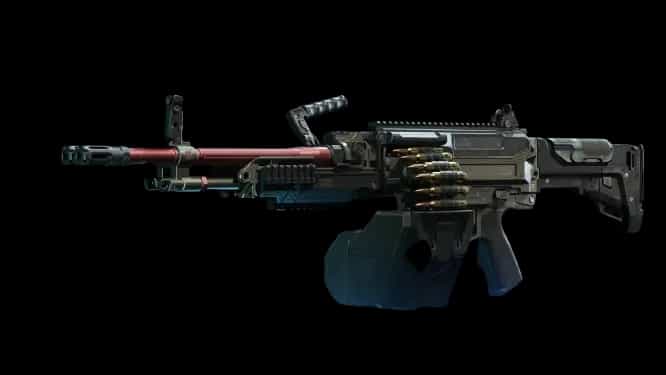
Warzone Mammoth Loadout: The Best Build for Recoil Control and Sustained Fire
The Mammoth lives up to its name. It is a heavy, forceful weapon designed to keep enemies pinned down, punish exposed rotations, and give an entire squad second thoughts about challenging the same angle twice. Its raw firepower is appealing, but an untreated Mammoth can feel demanding when the fight stretches beyond comfortable mid-range distances. Recoil, visual movement, and the weapon’s generally weighty handling all need to be considered.
This Warzone build concentrates on making the Mammoth more dependable without stripping away the characteristics that make it dangerous. The recoil-focused attachments help its shots stay grouped during longer bursts, while the extended magazine supports sustained pressure against multiple targets. It suits a deliberate player who prefers controlling rooftops, ridgelines, streets, and rotation routes rather than sprinting through every doorway in search of a close-range duel.
Best Loadout
The goal here is to turn the Mammoth into a stable squad-fighting weapon. It remains relatively heavy, but the improved control and generous ammunition capacity make it far easier to exploit its sustained damage.
| Attachment Slot | Selected Attachment |
|---|---|
| Muzzle | LTI Stentorian Brake |
| Barrel | 18" Tempered Barrel |
| Optic | Fang HoverPoint ELO |
| Underbarrel | VAS Convergence Foregrip |
| Magazine | Malady Extended Mag |
Attachment Analysis
The LTI Stentorian Brake and VAS Convergence Foregrip form the mechanical foundation of this setup. Their combined control helps calm the Mammoth during continuous fire, reducing the amount of manual correction needed once the weapon begins to climb. That matters because this is not a build intended for cautious two-shot taps. Its advantage comes from holding the trigger when an enemy is crossing open ground, repeatedly peeking from cover, or scrambling to reach safety after losing armour.
Adding the 18" Tempered Barrel strengthens that long-lane identity. It gives the weapon a more convincing performance outside the easiest mid-range engagements, helping shots feel less dependent on perfect distance management. The resulting build is better equipped for fights across roads, between buildings, or from one rooftop to another. There is a handling cost to building around a longer barrel and stronger recoil control, but the Mammoth was never going to imitate an SMG. Trying to force it into that role would waste its best qualities.
The Fang HoverPoint ELO provides a clean sight picture that works especially well when tracking players through sustained fire. With a weapon like this, optic clarity is more than a matter of preference: muzzle flash, recoil movement, and crowded backgrounds can make a partially hidden opponent difficult to follow. The Fang keeps the view relatively open, making it easier to see whether a target has ducked behind cover or changed direction during a rotation.
Finally, the Malady Extended Mag gives the entire loadout room to operate. A large ammunition reserve allows the Mammoth to pressure one enemy, transfer to a second target, and still have enough rounds to discourage a revive or counter-push. The extra capacity inevitably reinforces the weapon’s slower character, particularly when reloading, but it also means fewer interruptions at the worst possible moment. Together, these attachments create a controlled heavy weapon built around endurance rather than rapid movement.
Gameplay Tips
I’d treat the Mammoth as a weapon that shapes the fight before it finishes it. If a squad is rotating across an exposed street, I do not need to eliminate every player immediately. Breaking armour, forcing them behind a wall, and delaying their movement can be enough to let teammates claim better angles. The extended magazine is particularly valuable here because I can continue watching the escape route instead of reloading as soon as the first target disappears.
Positioning matters more than aggression. Before firing, I’d look for a piece of cover that lets me expose only a small portion of the character model. A rooftop ledge, a window with space to step sideways, or a low wall is much better than standing in the open and trusting the Mammoth’s damage output. Its stability makes repeated peeks dangerous for the enemy, but the slower handling means being caught away from cover can turn ugly very quickly.
There is also no shame in cutting a burst short. Against a player sprinting laterally at distance, I’d fire long enough to establish the recoil pattern, briefly reset when the aim drifts, and then resume. Emptying half the magazine into the horizon only advertises the position and burns through reserves. The Mammoth rewards pressure, but pressure still needs a purpose.
Inside buildings, I would avoid chasing a cracked opponent through narrow rooms unless I knew their exact position. An SMG player waiting beside a doorway will usually benefit from the Mammoth’s slower aim-down-sight speed and cumbersome movement. Let a faster secondary handle that job. If switching weapons is not possible, pre-aim the doorway, widen the angle carefully, and make the opponent walk into the stream of fire rather than trying to react after they appear.
Resurgence gives the build a slightly more aggressive role because targets return quickly and fights often involve several enemies collapsing on one building. I’d use the magazine to hold stairs or punish players dropping onto a roof, then relocate before the surviving teammates identify the angle. In Battle Royale, the same setup is better used from secure ground during rotations, particularly when the circle forces opponents away from natural cover.
The reload deserves respect. Starting one automatically after every elimination is a bad habit with the Mammoth, especially when the Malady Extended Mag may still contain enough rounds for another fight. I’d check the remaining ammunition, listen for footsteps, and move behind solid cover before committing. Many Mammoth users will be eliminated with the magazine out of the weapon, not because they genuinely ran dry, but because reloading felt like the tidy thing to do.
Conclusion
This Mammoth loadout turns a naturally intimidating weapon into a far more disciplined source of sustained fire. The LTI Stentorian Brake and VAS Convergence Foregrip control its recoil, the 18" Tempered Barrel supports ranged engagements, and the Fang HoverPoint ELO keeps moving targets visible. With the Malady Extended Mag supplying the necessary staying power, the build can disrupt entire squads without pausing after every exchange.
It will not rescue reckless pushes or compete comfortably with lightweight weapons in cramped rooms. Give it cover, a useful sightline, and enough patience to let an enemy make the first bad move, however, and the Mammoth becomes exactly the sort of weapon nobody wants watching their rotation.
PERKS & EQUIPMENT
- Scavenger
- Sprinter
- Tempered
Equipment
- LethalCombat Axe
- TacticalStim Shot