Kogot-7 - Meta Season 5 Warzone
MODS
GUIDE
Best Kogot-7 Loadout for Warzone: A Fast, Aggressive Build for Close-Range Pressure
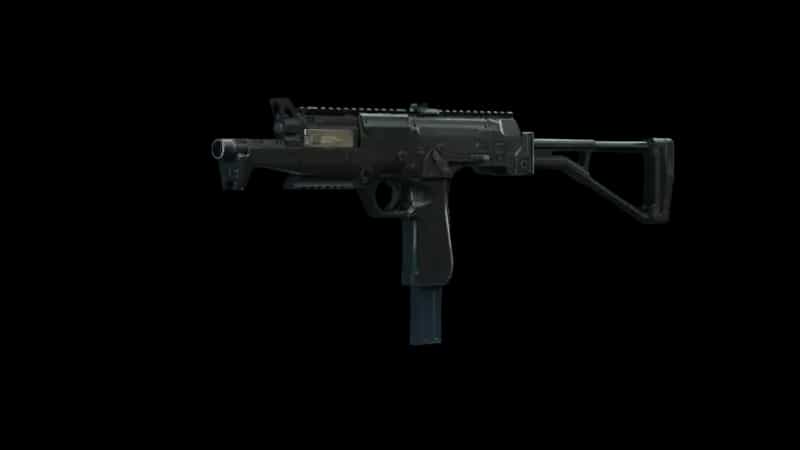
The Kogot-7 is at its most convincing in Warzone when you stop asking it to behave like a perfectly stable all-purpose rifle and lean into what it does well: fast engagements, constant movement, and fights where reaction time matters more than long-range precision. This setup pushes the weapon toward an aggressive role, giving it the responsiveness needed to challenge players around buildings, stairwells, rooftops, and other areas where gunfights rarely stay static for long.
With the 8.5" Targil Hock-XR Barrel, Vex Expanse Mag, Hawker Ported Comp, Convergence Box Laser, and F7-Howl Stock, the Kogot-7 becomes a mobile primary built around controllable bursts of pressure rather than passive lane-holding. It suits players who prefer to rotate early, close distance intelligently, and keep opponents uncomfortable instead of spending half a match staring through an optic at a distant rooftop.
Best Loadout
This configuration focuses on making the Kogot-7 easier to handle while moving aggressively through close and medium-range fights. The larger magazine gives the build enough staying power for squad engagements, while the compensator and movement-oriented components help prevent that extra aggression from turning the weapon into something difficult to control.
| Attachment Slot | Selected Attachment |
|---|---|
| Barrel | 8.5" Targil Hock-XR Barrel |
| Magazine | Vex Expanse Mag |
| Muzzle | Hawker Ported Comp |
| Laser | Convergence Box Laser |
| Stock | F7-Howl Stock |
Attachment Analysis
The interesting part of this setup is the balance between mobility and recoil management. A short barrel naturally fits the Kogot-7's aggressive identity, keeping the weapon feeling compact when moving through cramped areas or snapping onto a nearby target. Instead of trying to compensate by turning the gun into a heavy long-range platform, the rest of the build supports that same philosophy while adding enough control to stop sustained fire from becoming unpredictable.
The Hawker Ported Comp is particularly valuable because an aggressive weapon still needs to remain manageable once the first few rounds leave the barrel. Fast ADS or movement means very little if the sight immediately climbs away from a target. Combined with the stability offered by the rest of the setup, the compensator makes it easier to stay committed to a spray when an enemy starts strafing or attempts to escape behind cover.
Then there is the Vex Expanse Mag, arguably one of the most practical pieces of the entire loadout. Warzone rarely gives you the luxury of fighting one perfectly isolated opponent. A cracked player often has a teammate appearing a second later, and stopping to reload at that exact moment can throw away an otherwise excellent push. The extended ammunition capacity gives the Kogot-7 more flexibility when applying pressure to multiple enemies without forcing an immediate reset.
The Convergence Box Laser and F7-Howl Stock complete the build by reinforcing its responsive character. The result is not a weapon I would choose for repeatedly challenging enemies across huge open spaces. Instead, it feels designed for quicker target acquisition, repositioning, and fights where being ready half a second earlier can decide the exchange. That trade-off is worth embracing rather than fighting against.
Gameplay Tips
I wouldn't spend much time trying to make this Kogot-7 behave like a rooftop beam. If someone is sitting 80 metres away behind a head glitch, there are better weapons for that argument. I'd rather break line of sight, move through another building or piece of terrain, and force the next fight to happen somewhere the Kogot-7 can actually dictate the pace.
Imagine you're pushing a squad inside a two-storey building and you crack the first player through a doorway. That is exactly the kind of moment where the Vex Expanse Mag matters. Instead of instantly reloading out of habit, I'd keep enough ammunition available to cover the staircase or catch the teammate trying to swing the doorway. Warzone punishes unnecessary reloads constantly, especially against organised squads that trade kills properly.
Movement is another big part of using this build well. Against an enemy crossing between cover, I wouldn't plant my feet and try to trace them from an awkward angle. I'd move with the fight, shorten the distance where possible, and use the weapon's responsive setup to make the engagement less comfortable for them. The Kogot-7 benefits when you're making decisions quickly rather than waiting for the opponent to dictate where the duel happens.
That becomes even more noticeable in Resurgence, where players can appear from windows, roofs, staircases and redeploy angles within seconds. I'd use the Kogot-7 to clear compact areas and maintain momentum after winning the first duel. The danger comes when confidence turns into overextension. Chasing a cracked enemy around two corners without knowing where his teammates are is still a bad trade, no matter how mobile the weapon feels.
Battle Royale asks for a little more restraint. During a late rotation across exposed ground, I would avoid firing at every distant silhouette simply because I can see it. Giving away your position for a low-percentage long-range challenge often creates more problems than it solves. Keep the Kogot-7 ready for the team waiting around the next wall, ridge, or building entrance instead.
One small habit I'd keep with this build is resisting the urge to empty the magazine unnecessarily. The extra capacity is there to give you options during messy squad fights, not permission to spray continuously. Having fifteen or twenty rounds left when a second opponent suddenly slides through a doorway is far more useful than landing a few ambitious shots on someone disappearing behind a wall.
Conclusion
This Kogot-7 loadout succeeds because it gives the weapon a clear purpose. The 8.5" Targil Hock-XR Barrel, Hawker Ported Comp, Convergence Box Laser, F7-Howl Stock, and Vex Expanse Mag create a setup built for movement, pressure, and sustained close-to-medium-range engagements without sacrificing the control needed to stay competitive.
It is not the build I'd choose for players who want to spend the entire match challenging distant targets from fixed positions. Put it in the hands of someone who likes flanking, entering buildings, repositioning after a knock, and keeping squads under pressure, however, and the Kogot-7 becomes considerably more interesting. Treat distance as something you can manipulate rather than something you simply accept, and this setup starts to make a lot of sense.
PERKS & EQUIPMENT
- Mountaineer
- Sprinter
- Adaptive
Equipment
- LethalCombat Axe
- TacticalStim Shot