MPC-25 - Loadout Expel
MODS
GUIDE
Best MPC-25 Loadout in Warzone: High-Capacity Build for Aggressive Fights
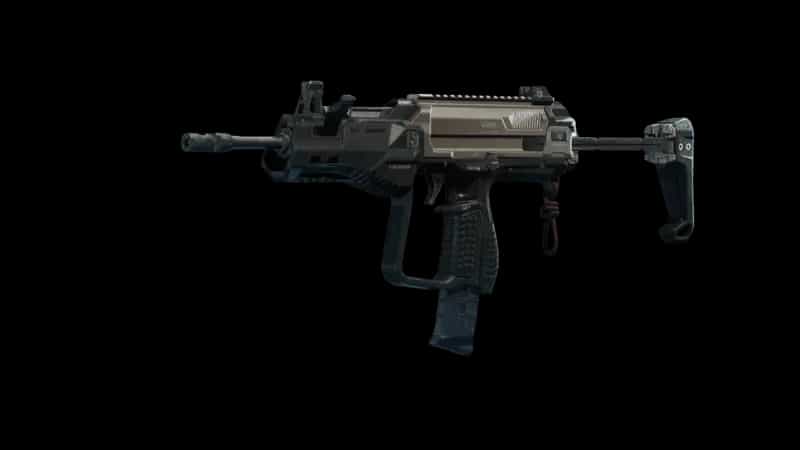
The MPC-25 can be a surprisingly flexible choice in Warzone when it is configured around controllable recoil, sustained fire, and enough ammunition to stay dangerous through extended engagements. Rather than trying to turn the weapon into a specialist build that only works at one distance, this setup focuses on making it dependable when fights become messy. The combination of the 14.5" VAS Ashe Barrel, MPC Overload Drum, and recoil-focused attachments gives the gun a practical balance between accuracy and staying power.
I particularly like this approach for players who want to hold their ground without constantly reloading after every short burst. The larger magazine gives you more freedom when several enemies are involved, while the barrel and foregrip help keep the weapon manageable when you need to stay on target. It suits an aggressive mid-range player who is comfortable taking initiative but still wants enough control to punish enemies crossing open areas.
Best Loadout
This configuration is built around sustained engagements rather than maximum handling speed. The five selected attachments work toward keeping the MPC-25 stable and useful when you need to put several opponents under pressure.
| Attachment Slot | Selected Attachment |
|---|---|
| Muzzle | LTI Stentorian Brake |
| Barrel | 14.5" VAS Ashe Barrel |
| Optic | None |
| Underbarrel | VAS Drift Lock Foregrip |
| Magazine | MPC Overload Drum |
Attachment Analysis
The strength of this setup comes from stacking several complementary improvements instead of chasing one extreme stat. The 14.5" VAS Ashe Barrel gives the MPC-25 a more suitable foundation for fights where targets are not standing directly in front of you. Having a longer barrel on the build makes sense when the weapon is expected to contribute beyond point-blank encounters, particularly when enemies are moving between cover or attempting to rotate across exposed ground.
The LTI Stentorian Brake and VAS Drift Lock Foregrip reinforce that philosophy. Recoil management becomes increasingly valuable as the engagement stretches out because small deviations become much more noticeable when you are trying to maintain hits on a moving target. Together, these attachments help make sustained fire easier to control, allowing the MPC-25 to feel less erratic when you commit to a longer burst.
Then there is the MPC Overload Drum, which changes how I would approach ammunition during a fight. A large magazine is not simply about having more bullets available; it gives you additional freedom to challenge multiple targets before being forced into a reload animation. That can be particularly useful when a squad is pushing from different angles or when one enemy is cracked and another immediately replaces them.
There is a trade-off, of course. A setup centered around a drum magazine and recoil-control attachments is unlikely to feel as nimble as an ultra-light build designed exclusively for fast ADS and sprint-to-fire performance. I would therefore treat the MPC-25 as a weapon that rewards deliberate positioning. The absence of an optic also keeps the build focused on its default sight picture, so players who prefer magnification may want to adapt their secondary weapon or attachment choices around that preference.
Gameplay Tips
I’d use this MPC-25 when I expect fights to develop around medium distances rather than constantly taking cramped interior duels. If an enemy is crossing between two buildings, moving through a street, or trying to reach a vehicle, I want to be the player who starts applying pressure before they reach safety. The recoil-focused setup gives me more confidence in holding the trigger long enough to finish a target instead of repeatedly breaking my aim to reset every few shots.
There is also a psychological advantage to the drum magazine. When a squad sees sustained fire coming from a window or rooftop, they often hesitate before committing to the crossing. I’d take advantage of that by firing enough to force movement, then changing my position rather than sitting in exactly the same spot. The MPC-25 gives me ammunition to maintain pressure, but I wouldn’t confuse that with permission to stand still and unload everything at one angle.
A building push requires a different mindset. If I have already damaged an opponent outside and they retreat indoors, I wouldn't automatically sprint after them with the MPC-25. That is the sort of situation where an SMG-focused secondary becomes valuable. I’d rather hold the exit, pre-aim the doorway, and make the enemy decide whether to reappear. Chasing a cracked player into a tight room can erase the advantages this loadout was designed to provide.
When enemies are moving unpredictably, I prefer controlled tracking over panic spraying. A player sliding across your screen can tempt you into dragging the reticle too aggressively, especially when the fight suddenly becomes close. I’d keep the weapon pointed toward the enemy's projected path and use the available ammunition to correct my aim instead of immediately dumping the entire drum. That discipline becomes even more useful when another opponent is waiting to challenge you after the first target disappears behind cover.
Resurgence rewards a slightly more aggressive interpretation. With teammates nearby, I’d use the MPC-25 to anchor pressure around a building, buy station, rooftop approach, or rotation route while the squad moves forward. In Battle Royale, I’m more interested in preserving the weapon’s strengths by choosing fights carefully. If my team is rotating through open terrain, I’d rather establish a strong position before enemies spot us than rely on the MPC-25 to rescue a bad crossing.
One habit I would avoid is reloading simply because the magazine is no longer full. With the Overload Drum, there is value in having ammunition ready for the next unexpected challenge. If I have 30 rounds left and know another squad is nearby, I may keep them rather than taking an unnecessary reload while exposed. Once the area is secure, that is the time to top up and prepare for the next engagement.
The uncomfortable moments usually come when an enemy gets inside the weapon's ideal engagement space and forces a sudden close-range duel. If someone appears around a corner with an SMG, I’m not trying to prove the MPC-25 can win every fight. I’d break line of sight, switch weapons, or use movement and cover to create the distance I want. Good loadouts still need good decision-making; the attachment setup can improve the gun's consistency, but it cannot eliminate unfavorable situations.
Conclusion
The MPC-25 becomes much more convincing when built around control and sustained pressure rather than raw speed. The 14.5" VAS Ashe Barrel, LTI Stentorian Brake, and VAS Drift Lock Foregrip create a stable foundation, while the MPC Overload Drum gives the weapon the ammunition capacity needed for hectic squad fights. It is a setup for players who like taking space, punishing rotations, and keeping enemies under fire without constantly stopping to reload. Give it a few matches and pay attention to how much more deliberately you can choose when to commit to a fight—the build rewards that kind of patience.
PERKS & EQUIPMENT
- Scavenger
- Sprinter
- Adaptive
Equipment
- LethalFrag
- TacticalGrappling Hook