VST - Best Loadout Warzone Season 5 by Expel
MODS
GUIDE
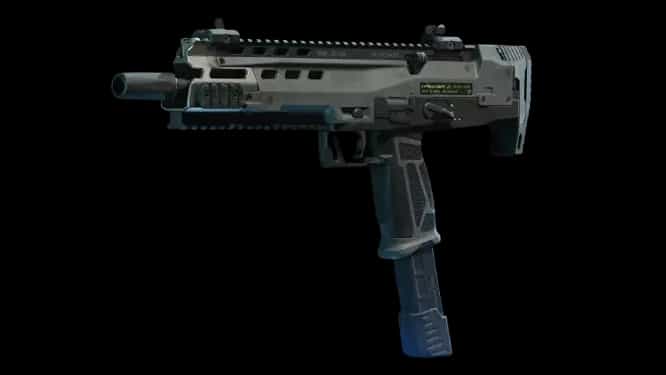
Best VST Loadout in Warzone for Controlled Mid-Range Fights
The VST becomes a much more dependable Warzone weapon when the build is focused on keeping its movement manageable without sacrificing the control needed for sustained gunfights. Rather than turning it into an extreme close-range setup, this configuration gives the weapon a broader purpose: challenging enemies across streets, covering rotations, pressuring rooftop positions, and still remaining responsive enough when a fight suddenly collapses into shorter distances.
What stands out about this version of the VST is its balance. The 14" LTI Expedition Barrel, Hawker Series 45, and VAS Convergence Foregrip form the stability-focused core of the setup, while the Avarice Extended MAG II gives you considerably more breathing room during squad engagements. The Hawker CUB-55 Pad rounds everything out by preventing the gun from feeling unnecessarily cumbersome. The result is a VST that rewards controlled aggression rather than constant point-blank rushing.
Best Loadout
This setup is built around making the VST easier to keep on target during the extended bursts that are common in Warzone. It has enough ammunition for multi-enemy pressure and enough control to make corrections when someone changes direction during a fight.
| Attachment Slot | Selected Attachment |
|---|---|
| Barrel | 14" LTI Expedition Barrel |
| Muzzle | Hawker Series 45 |
| Underbarrel | VAS Convergence Foregrip |
| Magazine | Avarice Extended MAG II |
| Stock | Hawker CUB-55 Pad |
Attachment Analysis
The biggest advantage of combining the 14" LTI Expedition Barrel with the Hawker Series 45 is consistency. The VST is far less useful if the opening shots connect but the weapon begins wandering away from the target once you commit to a longer burst. This pairing pushes the build toward cleaner sustained fire, which becomes especially noticeable when you are tracking somebody running between pieces of cover rather than shooting a stationary opponent.
Adding the VAS Convergence Foregrip reinforces that philosophy. Instead of building purely around raw mobility, the setup invests heavily in making small aiming corrections easier. That matters because many Warzone engagements are decided after the first few bullets. An enemy starts strafing, slides toward a doorway, jumps off a roof or changes direction in the open, and you need the sight picture to remain predictable while reacting. A controllable weapon gives you more opportunities to keep dealing damage rather than repeatedly releasing the trigger to reset your aim.
The Avarice Extended MAG II is equally important in practical matches. Extra magazine capacity gives the VST more freedom when two opponents appear almost simultaneously, and it reduces the likelihood of being forced into a reload immediately after breaking armor. That is particularly useful when applying pressure to a squad inside a building, where stopping to reload can completely change the tempo of the fight. The Hawker CUB-55 Pad helps keep the handling side of the build from becoming too sluggish, leaving the finished weapon balanced enough to reposition and re-engage instead of behaving like a stationary support gun.
Gameplay Tips
One situation where I’d lean heavily on this build is an enemy crossing exposed ground at medium range. I wouldn’t immediately dump the entire magazine the moment they appear. I’d settle the sight first, start firing once the tracking feels comfortable, then stay with the target as they begin reacting. The VST is much more convincing here when you treat recoil control as part of the tracking process instead of trying to overpower the gun with frantic corrections.
Inside buildings, I’d be more cautious. If I know a fast SMG player is waiting around a staircase or doorway, I don’t want to pretend this setup suddenly has the characteristics of a dedicated point-blank weapon. Pre-aiming becomes much more valuable. If the opponent cracks my armor and disappears behind a corner, chasing immediately is not always worth it either. I’d rather reposition, force them to guess which angle I’m holding, and use the VST’s steadier firing behavior once they expose themselves again.
The extended magazine also changes how aggressively I’d handle squad pressure. Imagine holding the roof of a two-story building while three enemies rotate through the street below. With a smaller magazine, I might have to abandon the angle after damaging the first player simply because the reload creates too much vulnerability. Here, I can keep firing, switch targets when somebody reaches cover, and potentially catch another opponent attempting to cross. I still wouldn’t waste ammunition spraying through every possible piece of cover, but I’d feel far less restricted about committing to a second target.
Resurgence encourages a slightly faster rhythm. There, I’d use the VST to soften players before moving closer rather than waiting indefinitely for perfect long-range eliminations. If someone is cracked behind a wall twenty or thirty meters away and I know their teammates are distracted, that is often enough information to start closing the gap. Battle Royale demands more restraint. A bad chase across open terrain can erase several minutes of positioning, so I’d rather keep the favorable angle and force the damaged player to make the next decision.
Something else I’d watch carefully is the reload after a busy engagement. A large magazine can make you forget how many rounds you actually spent. After firing at two enemies, I’d check the ammo count before automatically sprinting toward the next piece of cover. There is nothing worse than reaching a new angle, seeing a player rotate into view, and discovering you carried twelve rounds into what should have been an easy fight.
Conclusion
This VST configuration is built for players who want control, sustained pressure, and flexibility rather than a weapon designed around one extremely narrow range. The Expedition Barrel, Hawker Series 45, and Convergence Foregrip give the gun a steadier foundation, while the enlarged magazine makes difficult squad fights much easier to manage. The CUB-55 Pad keeps that extra stability from turning the weapon into something awkward to move with.
If you prefer taking deliberate fights, holding strong angles and punishing opponents when they rotate between cover, this VST loadout deserves a place in your Warzone classes. Its greatest strength is not one dramatic stat advantage; it is how rarely the build forces you into uncomfortable decisions when a firefight lasts longer than expected.
PERKS & EQUIPMENT
- Scavenger
- Sprinter
- Hunter
Equipment
- LethalCombat Axe
- TacticalGrappling Hook