VST for Rebirth Island (Pillion Ready)
MODS
GUIDE
Warzone VST Loadout: The Best Build for Recoil Control and Aggressive Rotations
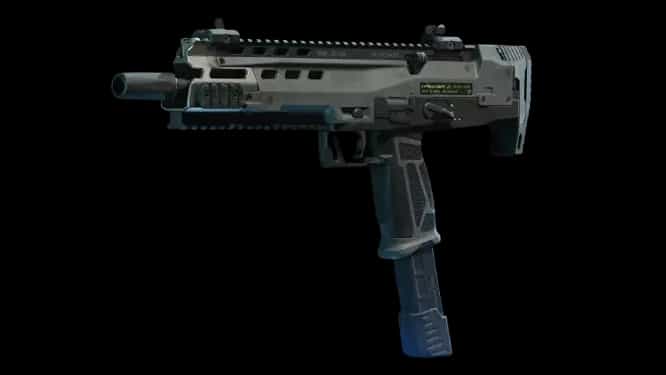
The VST becomes a far more dependable Warzone weapon when its natural mobility is supported by stronger recoil control and enough ammunition to survive extended squad fights. This setup is built for players who prefer to stay active rather than holding a single angle for an entire match. It keeps the weapon responsive when moving between cover, but also gives it the stability required to challenge enemies across streets, rooftops, and other common mid-range sightlines.
Instead of pushing the VST toward one extreme, this loadout creates a balanced primary that can handle several different situations. The recoil-focused attachments make tracking easier, the extended magazine provides breathing room against multiple opponents, and the stock and rear grip prevent the build from becoming unnecessarily sluggish. The result is a practical configuration for aggressive Battle Royale rotations and the faster pace of Resurgence.
Best Loadout
This VST build combines recoil management, ammunition capacity, and handling improvements. It is particularly effective when you need to move quickly, establish a firing position, and immediately pressure enemies without fighting against excessive weapon movement.
| Attachment Slot | Selected Attachment |
|---|---|
| Muzzle | LTI Stentorian Brake |
| Underbarrel | VAS Convergence Foregrip |
| Magazine | Avarice Extended MAG II |
| Stock | Hawker CUB-55 Pad |
| Rear Grip | Pillion Ready Grip |
Attachment Analysis
The LTI Stentorian Brake and VAS Convergence Foregrip form the mechanical foundation of the loadout. Their job is to make the VST more predictable while firing, especially when a target changes direction or briefly disappears behind cover. Reduced recoil deviation matters just as much as raw vertical control in Warzone: a weapon that rises consistently can be corrected, while an unstable firing pattern causes bullets to drift away from the enemy’s upper body. Together, these attachments make sustained bursts easier to guide without forcing you to constantly reset your aim.
That added control also makes the Avarice Extended MAG II more valuable. A larger magazine is not only useful for eliminating several opponents; it lets you maintain pressure when a damaged enemy attempts to reposition or plate. You can fire through a doorway, cover a teammate’s push, and still have enough rounds left to challenge the next player. The trade-off with extended magazines is normally heavier handling, but the rest of this configuration is designed to keep that penalty manageable.
The Hawker CUB-55 Pad and Pillion Ready Grip give the VST a more responsive character. Their handling benefits help the weapon settle after movement and make it less awkward when transitioning from a rotation into a gunfight. That balance is important because a heavily stabilised build can easily become too slow for Resurgence or close-quarter fights. Here, the VST retains enough speed to react decisively while gaining the accuracy needed for controlled mid-range engagements.
There is no dedicated optic in this setup, so the build relies on the VST’s standard sight picture. That frees all five attachment slots for performance upgrades, although it also means clean target acquisition will depend on positioning and familiarity with the iron sights. In return, you get a versatile weapon with improved recoil control, useful magazine capacity, and handling that remains appropriate for an active playstyle.
Gameplay Tips
One habit I would develop with this VST is firing from cover without becoming anchored to the same position. If I spot an enemy crossing an exposed road, I want to begin shooting from a head glitch or the edge of a wall, track the target with a controlled burst, and then shift before their teammates locate me. The recoil setup gives you enough consistency to punish movement, but it should not tempt you into standing in the open and trading damage.
Inside buildings, I would treat the VST as capable rather than dominant. When footsteps are approaching a staircase, pre-aiming the landing is much safer than trying to sprint directly into an SMG player. The Hawker pad and Pillion grip help when you need to react, yet they cannot erase the disadvantage of being surprised at point-blank range. If an opponent breaks my armour and disappears around a tight corner, I would rarely chase without tactical equipment or information from a teammate.
The extended magazine changes how confidently you can handle squad pressure. Imagine two enemies pushing through separate doors while a third fires through a window: reloading after the first knock can lose the entire fight. With the Avarice Extended MAG II, I would keep the doorway covered for an extra moment, force the second opponent to hesitate, and only reload after moving into a protected room. That pause between engagements is often more valuable than squeezing out an ambitious thirst.
Battle Royale rewards the controlled side of this setup. I would use terrain, walls, and rooftop cover to create mid-range engagements where the brake and foregrip can do their best work. During late rotations, the VST is well suited to pressuring enemies who are running ahead of the gas, but I would avoid wasting half the magazine on tiny targets at extreme distance. Suppression can be useful; emptying your ammunition reserves for occasional armour hits is not.
Resurgence asks for quicker decisions. Here, I would use the VST to support immediate pushes after a crack, especially when teammates are already closing the distance. It has the capacity to challenge more than one enemy before reloading, but that does not mean every knock must be chased. Sometimes the better move is to watch the escape route and catch the next opponent trying to recover a teammate’s equipment.
Be particularly disciplined when shooting at players sliding across your screen. The improved stability makes tracking smoother, but long uninterrupted sprays can still drag your aim behind a fast target. I prefer a brief release of the trigger to recentre, especially if the enemy reaches cover. Saving ten rounds instead of firing them into a wall may decide the next encounter when another squad arrives before you can reload.
Conclusion
This VST loadout delivers a useful mix of accuracy, handling, and sustained firepower without turning the weapon into a slow, overly specialised platform. The LTI Stentorian Brake and VAS Convergence Foregrip keep bursts manageable, while the extended magazine supports multi-enemy engagements and prolonged pressure. With the Hawker CUB-55 Pad and Pillion Ready Grip preserving responsiveness, the build remains comfortable during rotations and sudden fights.
Use it as a mobile, cover-oriented primary and let its consistency create opportunities for your squad. The VST feels most convincing when you resist unnecessary chases, preserve enough ammunition for the second opponent, and reposition before the enemy can return fire on your terms.
PERKS & EQUIPMENT
- Scavenger
- Sprinter
- Adaptive
Equipment
- LethalCombat Axe
- TacticalStim Shot