VST - Max Movement Loadout Warzone Season 5
MODS
GUIDE
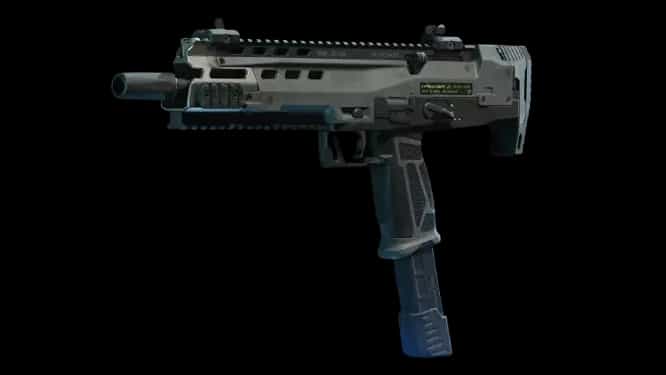
Best VST Loadout for Warzone: A Fast, Controlled Build for Aggressive Fights
The VST is at its most convincing when it is allowed to play aggressively without becoming reckless. This setup leans into that identity, combining a compact barrel with stronger recoil management, a larger magazine and extra aiming stability. Rather than trying to turn the weapon into a long-range laser, the build focuses on the distances where fast reactions, clean tracking and sustained pressure matter more than raw reach.
That makes it particularly attractive for players who like to move with their squad, challenge enemies around buildings and punish opponents during short rotations. The VST remains mobile enough to feel comfortable when repositioning, but the supporting attachments give it noticeably more composure once the shooting starts. It is a setup built for repeated engagements rather than one spectacular opening burst.
Best Loadout
The goal here is to keep the VST responsive while removing some of the instability that can make aggressive weapons difficult to trust once a fight stretches beyond point-blank range.
| Attachment Slot | Selected Attachment |
|---|---|
| Barrel | 9.7" Enmity Barrel |
| Muzzle | LTI Stentorian Brake |
| Magazine | Avarice Extended MAG II |
| Underbarrel | VAS Convergence Foregrip |
| Stock | LTI Stern Aim Pad |
Attachment Analysis
The 9.7" Enmity Barrel establishes the direction of the entire build. A short-barrel configuration makes far more sense when the VST is being used as a weapon for active movement, fast room-to-room transitions and fights where getting the gun onto the next target quickly matters. You are not building around passive rooftop beams here; the priority is maintaining a lively feel while moving through contested areas.
That aggressive foundation is balanced by the LTI Stentorian Brake and VAS Convergence Foregrip. Together, they give the setup the control needed to keep bursts centred when an enemy starts strafing or when the engagement unexpectedly extends across a street. That matters because a quick weapon loses much of its usefulness if too many rounds disappear around the target as soon as the initial recoil kicks in.
The LTI Stern Aim Pad reinforces that controlled character without changing what the weapon is supposed to do. Added aiming stability is particularly valuable when pre-aiming doors, holding a staircase or waiting for somebody to appear from behind cover. It also makes small corrections easier when tracking targets that repeatedly change direction.
Then there is the Avarice Extended MAG II, which is arguably one of the most important pieces of the setup in squad modes. Aggressive engagements rarely stay as neat one-versus-one fights. A cracked opponent may retreat while a teammate swings another angle, and having more rounds available gives you much more freedom to keep pressure on the group instead of immediately disappearing into a reload.
There is still a trade-off. This is not a build designed around maximum bullet velocity or extreme damage-range performance, and the extended magazine can work against some of the mobility you gain elsewhere. The result, however, is a sensible middle ground: quick enough to play proactively, controlled enough to stretch beyond indoor distances, and forgiving enough to survive messy multi-enemy fights.
Gameplay Tips
I would treat this VST as a weapon for controlling the space between true close range and conventional assault-rifle territory. Imagine clearing one building, looking across the road and seeing somebody sprinting toward the next piece of cover. That is the sort of target I want with this setup. There is enough control to follow the movement, but the gun still feels suited to immediately pushing forward if that player gets cracked.
Inside buildings, I would resist the temptation to sprint blindly through every doorway just because the barrel is short. The VAS Convergence Foregrip and Stern Aim Pad give you a reason to slow down for half a second when you know somebody is nearby. Pre-aiming the top of a staircase or the edge of a kitchen doorway can turn the VST into a much more disciplined weapon than its aggressive configuration initially suggests.
The extended magazine changes how I would approach squad pressure as well. If two enemies are crossing the same lane, I would rather keep firing after downing the first than instantly duck away for a reload. That extra ammunition gives you the chance to transfer onto the second target and force another plate break before the squad has time to reorganise. I still would not waste rounds indefinitely, though. Reloading behind cover after the fight is actually won is much safer than discovering an empty magazine halfway through the next push.
One situation I would avoid is trying to trade endlessly with a stable long-range rifle from a rooftop or hillside. Even if the recoil feels manageable, that does not mean the VST suddenly becomes the right weapon for every sightline. If an opponent is comfortably holding you from deep range, I would break line of sight, rotate closer and force the next engagement somewhere the VST can actually exploit its quicker handling.
Resurgence gives this setup plenty of opportunities because fights tend to restart before either team has completely reset. A squad retreats into another room, somebody drops from a roof, another player lands behind the building — those chaotic transitions suit a weapon that can move quickly from one target to another while carrying enough ammunition to stay involved.
Battle Royale requires a little more restraint. During an exposed rotation, I would use natural cover aggressively rather than trying to challenge every enemy who appears at the edge of the screen. Save the VST for the moment the distance closes. If a squad is waiting around the next cluster of buildings, arriving with a full magazine and a better angle is worth far more than landing a few ambitious shots from across an open field.
One habit I would build around this loadout is knowing when not to chase a cracked player. The VST encourages momentum, but following somebody around a corner without information can put you directly into their teammates. Sometimes the stronger play is to hold the escape route, reload, and make them come back into a fight on your terms.
Conclusion
This VST setup gives Warzone players an appealing balance of mobility, recoil control, stability and sustained firepower. The 9.7" Enmity Barrel keeps the weapon focused on aggressive engagements, while the Stentorian Brake, Convergence Foregrip and Stern Aim Pad add enough discipline to make those fights easier to manage. The Avarice Extended MAG II completes the package by providing the ammunition needed when a quick duel turns into a full squad engagement.
It is not the VST build I would choose for sitting on distant rooftops and trading shots across half the map. Put it in crowded rotations, building fights and fast squad pushes, though, and its purpose becomes much clearer. Used with a little patience between bursts of aggression, this configuration has exactly the sort of flexibility that can keep a Warzone loadout relevant from the first contract to the final circle.
PERKS & EQUIPMENT
- Mountaineer
- Sprinter
- Tempered
Equipment
- LethalCombat Axe
- TacticalGrappling Hook