VST Super Close Range - Loadout Warzone Season 5
MODS
GUIDE
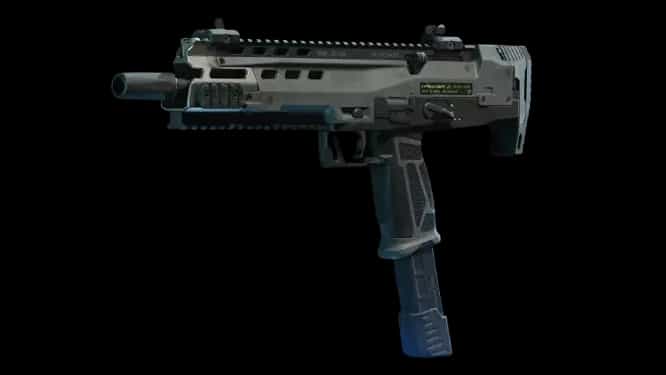
Best VST Loadout for Black Ops 7 Multiplayer
The VST rewards players who value control, consistency, and sustained pressure over frantic run-and-gun aggression. Its dependable handling makes it particularly effective when locking down lanes, challenging opponents around cover, or supporting teammates from a position that offers a little breathing room. It may not be the flashiest weapon in Black Ops 7 Multiplayer, but it becomes extremely difficult to counter when its recoil is properly managed.
This setup leans into that reliable character. Instead of chasing maximum movement speed or an ultra-fast aim-down-sight time, the build improves recoil control, firing stability, and magazine capacity. It suits a measured assault-rifle playstyle: move with the team, anticipate enemy routes, pre-aim dangerous angles, and punish anyone who exposes themselves for too long.
Best Loadout
The following five attachments turn the VST into a stable, high-capacity weapon designed for medium-range engagements and objective-based modes:
| Attachment Slot | Selected Attachment |
|---|---|
| Muzzle | LTI Stentorian Brake |
| Underbarrel | EAM Steady-90 |
| Magazine | Avarice Extended MAG II |
| Rear Grip | Quiver Control Grip |
| Stock | Hawker CUB-55 Pad |
Attachment Analysis
Recoil management is the foundation of this VST build. The LTI Stentorian Brake works alongside the EAM Steady-90 to reduce unwanted movement while firing, making longer bursts much easier to keep on target. That combination is especially useful when an opponent is moving horizontally across a lane, because fewer corrections are needed once the sights have settled onto the target. The result is not merely a weapon that looks steadier; it is one that wastes fewer rounds during sustained engagements.
The Quiver Control Grip and Hawker CUB-55 Pad reinforce that controlled behavior. Together, they help the VST remain composed while aiming and tracking targets, particularly when firing from behind partial cover or adjusting between opponents. There is enough stability here to remain accurate through a full exchange without forcing the player to fire only tiny bursts. The weapon still benefits from sensible trigger discipline, but its recoil becomes predictable enough that experienced players can confidently extend their firing window.
Capacity is supplied by the Avarice Extended MAG II, which gives the build considerably more freedom during busy fights. A larger magazine matters when two opponents appear together, when enemies repeatedly challenge an objective, or when the first target escapes behind cover after absorbing several rounds. The attachment reduces the pressure to reload after every elimination and allows the VST to keep influencing a lane while teammates reposition. The trade-off is a heavier overall configuration, so the build should be treated as a stable fighting platform rather than an oversized SMG.
These choices create a focused setup rather than a perfectly balanced one. There is no dedicated optic, so comfort with the VST’s standard sights will matter. Mobility and snap responsiveness also take a back seat to accuracy and sustained fire. In return, the weapon becomes forgiving during medium-range battles, reliable against moving targets, and well suited to modes where controlling space is more valuable than constantly sprinting toward the next red dot.
Gameplay Tips
My first instinct with this VST would be to occupy the edge of the action, not the back of the map. I want to be close enough to support an objective but far enough away that an SMG cannot instantly erase the build’s stability advantage. On a Hardpoint, that could mean watching the main entrance from a nearby head glitch rather than standing directly inside the hill. The extended magazine lets me challenge the first attacker and stay ready for the teammate arriving immediately behind them.
A common mistake would be chasing a damaged enemy through a doorway simply because the magazine still has ammunition. If I crack an opponent’s position and they disappear into a tight room, I would usually hold the exit or rotate to another angle. This VST is strongest when the enemy has to enter its line of fire. Following someone into a cramped staircase gives away that advantage and turns the encounter into a contest of sprint-to-fire speed.
Pre-aiming needs to be deliberate, though. Walking around the entire map while aiming will make the build feel unnecessarily slow and leave you vulnerable to flanks. I would raise the weapon just before reaching a known challenge point: the corner overlooking a central lane, the window above an objective, or the doorway through which defenders usually return after spawning. Between those areas, lower the sights, move decisively, and use cover to avoid being caught during the transition.
The larger magazine becomes particularly valuable once a match turns chaotic. Suppose an enemy captures a flag and two teammates begin escorting the carrier across an exposed section of the map. I would resist dumping bullets into the first silhouette that appears. Settle the sights, remove the closest threat, and transfer to the next opponent without automatically reloading. The VST’s controlled recoil supports those target transitions, while the Avarice Extended MAG II provides the reserves needed to finish the sequence.
There is still a point where disengaging is smarter than fighting. If a fast weapon catches me while sliding into a small room, I would break line of sight instead of attempting to rescue a bad opening duel. Likewise, a distant opponent showing only a few pixels above cover may consume too much ammunition for too little reward. The build can reach across a lane, but its real strength is repeatedly landing accurate shots at practical multiplayer distances.
One habit fits this setup especially well: reload based on the situation, not on muscle memory. After one elimination, I would first check the minimap, listen for the next push, and make sure the lane is actually clear. That half-full extended magazine is often more useful than being caught halfway through a long reload while another opponent swings the corner.
Conclusion
This VST loadout gives Black Ops 7 Multiplayer players a dependable weapon for controlling routes, supporting objectives, and handling consecutive opponents. The LTI Stentorian Brake, EAM Steady-90, Quiver Control Grip, and Hawker CUB-55 Pad produce a composed firing platform, while the Avarice Extended MAG II keeps it operational when a single duel becomes a full squad engagement.
It demands thoughtful positioning and some restraint in close quarters, but that is a fair exchange for its accuracy and staying power. Use the VST to make opponents fight on your terms, and even heavily contested lanes can start to feel remarkably manageable.
PERKS & EQUIPMENT
- Drill Instructor
- Sprinter
- Adaptive
Equipment
- LethalCombat Axe
- TacticalStim Shot