VST Hip Fire Loadout by Galaxywz
MODS
GUIDE
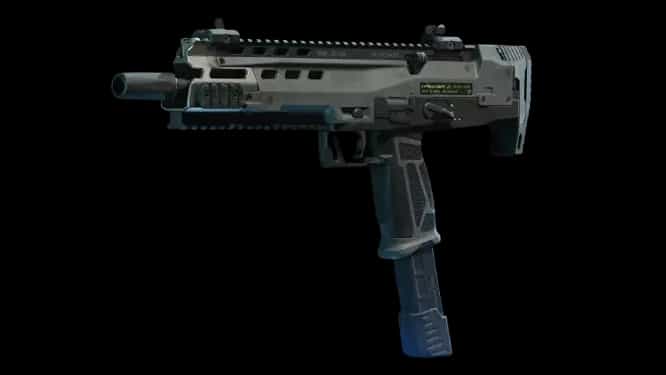
Best VST Loadout for Warzone: Fast, Aggressive Close-Range Build
The VST is the kind of Warzone weapon that makes the most sense when you stop treating every gunfight like a recoil-control test at 50 meters. This build is geared toward aggression, quick reactions, and the messy engagements that happen around buildings, stairwells, rooftops, and tight rotations. With the 9.7" Enmity Barrel, Hawker Hybrid .45, and EAM ScatterLine Laser supporting its close-range characteristics, the VST becomes a weapon you can confidently bring into spaces where hesitation usually gets punished.
Rather than trying to turn the VST into a long-range laser, this setup leans into what the weapon can do well: get on target quickly, remain manageable during sustained fire, and give you enough ammunition to deal with more than one opponent before desperately searching for cover. The Avarice Extended MAG II is particularly important in Warzone, where armor plates stretch gunfights and a single magazine can disappear surprisingly quickly against a coordinated squad. Add the Buffer Spring, and the build feels much more controlled without sacrificing the aggressive personality that makes the VST appealing in the first place.
Best Loadout
This configuration is designed around close-to-medium-range pressure. It gives the VST a useful combination of magazine capacity, recoil management, responsive handling, and dependable firing behavior while keeping the weapon focused on fights where its speed matters more than extreme-range precision.
| Attachment Slot | Selected Attachment |
|---|---|
| Barrel | 9.7" Enmity Barrel |
| Magazine | Avarice Extended MAG II |
| Fire Mods | Buffer Spring |
| Laser | EAM ScatterLine Laser |
| Muzzle | Hawker Hybrid .45 |
Attachment Analysis
The build works because its attachments reinforce the same general role instead of pulling the VST in different directions. The 9.7" Enmity Barrel keeps the weapon oriented toward faster, more mobile engagements, while the Hawker Hybrid .45 helps make the firing pattern easier to manage when you need to stay on an armored target for longer than a few bullets. That matters especially once an opponent starts strafing across a doorway or breaking sideways after you land the opening shots.
Recoil management becomes even more important when paired with an extended magazine. The Avarice Extended MAG II gives you the breathing room to keep firing through a complicated squad fight rather than treating every missed bullet as a potential disaster. The Buffer Spring complements that extra capacity by helping the VST stay composed during longer bursts, so the magazine is useful for more than simply spraying additional rounds. Instead of repeatedly correcting the weapon after every few shots, you can concentrate more on tracking the enemy and deciding whether to continue the challenge.
The EAM ScatterLine Laser rounds out the setup by supporting the responsive handling expected from an aggressive VST configuration. Taken together, these attachments create a weapon that is comfortable when engagements develop quickly. You still have to respect the limits of a compact close-range build, particularly once targets become small or partially obscured, but inside its intended distances the VST offers a good mixture of mobility, sustained fire, and controllability. The result is less of a specialist hip-fire gimmick and more of a practical weapon for constantly moving through populated sections of the map.
Gameplay Tips
One situation where I’d want this VST ready is when a squad has already taken damage and starts retreating through a building. That is exactly the moment when I wouldn’t waste several seconds holding the same doorway. I’d look for the next entrance, climb, window, or staircase and try to change the angle while they are plating. The VST rewards that kind of pressure because the extended magazine lets you commit to the follow-up fight without immediately wondering whether eight bullets are left in the gun.
I’d be much more careful when somebody is crossing an open street or moving between distant pieces of cover. You can absolutely keep bullets on them for a while, but I wouldn’t turn that into an ego challenge against a stable assault rifle or LMG. Put some damage into the target, force the plate animation if possible, then move. A cracked enemy 45 meters away is tempting; chasing that crack across exposed terrain with a close-range weapon is how a good opening turns into a bad death.
Inside buildings, pre-aiming becomes more valuable than constantly sprinting. If footsteps tell me someone is about to appear at the top of a staircase, I’d rather arrive with the weapon already centered on the likely head-and-chest line than depend on pure reaction speed. On the other hand, once I know an opponent is isolated and recovering, that is when I’d accelerate. The magazine capacity gives you enough margin to clear the first player and still have ammunition available if his teammate suddenly swings from the adjacent room.
Resurgence suits this configuration especially well because fights keep collapsing into one another. You might finish somebody on a roof, drop one level to plate, and immediately hear another player climbing the ladder. I’d resist the habit of reloading after every elimination. With the Avarice magazine, checking the remaining ammo before automatically starting a reload can save you from being caught with the weapon open while another enemy appears.
There is also a small positional habit I’d keep in mind: use cover that lets you close distance rather than cover that simply keeps you alive. A wall, parked vehicle, staircase, or rooftop structure can become part of your route toward the next favorable VST engagement. If the enemy refuses to let you shorten the gap, I’m perfectly happy to stop forcing the issue and let a longer-range secondary take over.
Conclusion
This VST loadout succeeds by giving the weapon a clear job. The 9.7" Enmity Barrel, Hawker Hybrid .45, Buffer Spring, EAM ScatterLine Laser, and Avarice Extended MAG II combine into a fast, pressure-oriented setup that can stay dangerous through prolonged close-range exchanges without becoming unnecessarily cumbersome.
It is not a build I’d choose for staring across the map from a rooftop. Give it walls to work around, short rotations to attack, and enemies who have to make decisions under pressure, however, and the VST becomes far more convincing. If your Warzone games tend to involve pushing occupied buildings, chasing damaged squads, and moving aggressively from one piece of cover to the next, this configuration deserves a place in your next loadout.
PERKS & EQUIPMENT
- Drill Instructor
- Sprinter
- Tempered
Equipment
- LethalCombat Axe
- TacticalGrappling Hook