VST - Loadout LuckyChamu
MODS
GUIDE
Best VST Loadout for Warzone: Fast, Stable and Built for Aggressive Fights
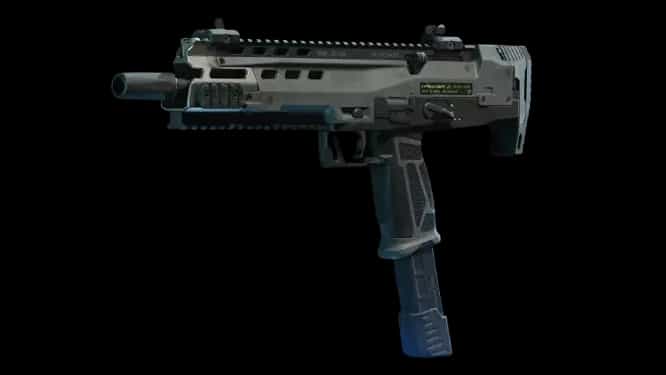
The VST is the kind of Warzone weapon that rewards players who refuse to stay planted in one position for very long. With the right setup, it feels much more comfortable when moving between cover, challenging enemies inside buildings, or applying pressure before an opponent has time to reset. This particular build leans into that identity rather than trying to force the VST into a slow, long-range role. The combination of the 9.7" Enmity Barrel, Hawker Hybrid .45 and movement-focused supporting attachments creates a weapon designed for quick engagements without sacrificing the control needed to keep shots connected.
What stands out about this configuration is its balance. It is aggressive, but it does not throw stability away just to gain speed. That distinction matters in Warzone, where a weapon can feel excellent during the first few meters of a fight and then become frustrating as soon as an enemy slides behind cover or starts strafing across a doorway. The VST works best here as a flexible close-to-mid-range option for players who want to stay mobile while still having enough consistency to finish targets outside point-blank distance.
Best Loadout
This setup gives the VST a strong mixture of mobility, magazine capacity and manageable handling. Rather than loading it with attachments that make the gun unnecessarily heavy, the build keeps its responsive character intact while adding enough support for prolonged squad fights.
| Attachment Slot | Selected Attachment |
|---|---|
| Barrel | 9.7" Enmity Barrel |
| Muzzle | Hawker Hybrid .45 |
| Magazine | Amplify Extended |
| Underbarrel | EAM Lightpath Foregrip |
| Stock | VAS Blench Pad |
Attachment Analysis
The 9.7" Enmity Barrel forms the foundation of the build by keeping the VST compact and suited to faster engagements. Pairing it with the Hawker Hybrid .45 gives the weapon a more controlled firing feel, which is particularly useful when a fight stretches beyond the distance where raw movement can compensate for missed shots. The idea is not to turn the VST into a laser-beam rifle; it is to reduce enough unwanted movement that tracking an opponent through a full burst remains practical.
That becomes more noticeable once the EAM Lightpath Foregrip and VAS Blench Pad enter the setup. Together, they support the weapon's responsive handling and give the build the kind of balance needed when repeatedly transitioning between sprinting, aiming and changing positions. Warzone fights rarely happen against stationary targets, so maintaining a usable sight picture while reacting to strafes and slides is more valuable than chasing a purely theoretical recoil statistic.
The Amplify Extended magazine is just as important. A mobile weapon encourages aggressive decisions, and aggressive decisions often mean encountering more than one enemy before there is a safe opportunity to reload. Extra ammunition gives the VST considerably more breathing room when finishing a downed player, transferring fire onto a teammate, or continuing to pressure someone who retreats behind cover.
Taken together, these five attachments create a VST that favors controlled aggression. There is enough mobility to attack favorable angles, enough ammunition to survive messy encounters and enough stability to remain useful when a target is not standing directly in front of you. That versatility is what makes the setup interesting.
Gameplay Tips
I wouldn't treat this VST as a weapon that needs to win every gunfight from the exact position where the first bullet was fired. Its mobility is much more valuable when used to change the fight. If I crack someone through a window, for example, I'd rather move toward another doorway or climb to a different level than keep repeating the same peek. The build gives you the handling to make those small positional changes without feeling as though you're carrying a heavy primary.
Inside buildings, pre-aiming still matters. Being mobile does not mean sprinting blindly into every room. If footsteps tell me somebody is waiting around a staircase or narrow hallway, I'd slow down before reaching the angle and let the VST's controllable firing behavior do the work. Against an enemy already holding the doorway, giving away the first several bullets because you were caught mid-sprint can erase most of the advantage this setup provides.
One situation where I'd be careful is chasing a cracked opponent into open ground. The temptation is obvious: you've already taken most of their armor, they're running, and the VST feels quick enough to finish the job. But if that player reaches a head glitch 40 meters away while you're still exposed, the fight suddenly shifts toward weapons built for sustained ranged accuracy. I'd use cover to close the distance rather than assuming the VST can brute-force every extension.
The extended magazine also changes how I'd approach squad pressure. After downing the first enemy, I wouldn't automatically reload unless there is genuine cover and time to do it. Keeping enough rounds available to challenge a second player is often more valuable than entering every engagement with a completely full magazine. In Resurgence especially, opponents appear from staircases, rooftops and adjacent rooms quickly enough that unnecessary reloads can get punished.
Battle Royale gives you a little more reason to be selective. During late rotations, I'd pair the VST with something capable of handling longer sightlines and only bring it out once the fight moves around buildings, rocks or tighter pieces of cover. It feels far more convincing when you can dictate the distance instead of trading sustained fire across a wide field.
Moving enemies are where I'd lean heavily on tracking rather than trying to snap instantly onto the head. Keep the aim flowing with a strafing target and let the build's control help maintain the burst. A player sliding across a doorway is far easier to finish when you resist the urge to overcorrect your aim every half-second.
There is also a simple habit I'd keep with this setup: after winning a fight, move before assuming the area is safe. A weapon built around mobility gives you very little reason to stand beside the same loot pile while the eliminated squad's teammates are already looking toward the gunfire.
Conclusion
This VST loadout succeeds because it keeps the weapon focused on what it can do well: move quickly, stay manageable under sustained fire and maintain pressure through several phases of a fight. The 9.7" Enmity Barrel and Hawker Hybrid .45 establish the core behavior, while the EAM Lightpath Foregrip and VAS Blench Pad keep the gun responsive enough for aggressive positioning. Adding the Amplify Extended magazine rounds out the setup with the ammunition needed for chaotic squad engagements.
It is not a build I'd choose for sitting on a distant rooftop and challenging every silhouette on the horizon. Give it tighter terrain, frequent cover and opportunities to reposition, though, and the VST becomes much more dangerous. If your Warzone style revolves around taking space rather than waiting for opponents to come to you, this configuration deserves a place in your next loadout.
PERKS & EQUIPMENT
- Drill Instructor
- Sprinter
- Adaptive
Equipment
- LethalCombat Axe
- TacticalStim Shot