VST - Top Loadout Ranked DiazBiffle
MODS
GUIDE
Best VST Loadout for Warzone: A Fast, Controlled Build for Aggressive Fights
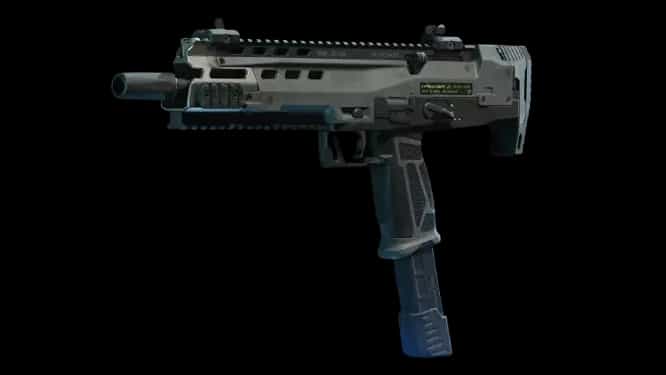
The VST is at its best when it is allowed to play aggressively without becoming difficult to manage. It has the kind of profile that rewards players who constantly move between cover, challenge enemies at short-to-medium range, and look for openings rather than sitting back for extended long-range exchanges. This setup pushes the weapon in exactly that direction, combining a compact barrel with strong recoil-management attachments and a larger magazine that gives the VST much more breathing room during hectic squad fights.
What stands out about this configuration is the balance between speed and control. The 9.7" Enmity Barrel keeps the weapon suited to mobile engagements, while the LTI Stentorian Brake, VAS Convergence Foregrip, and LTI Stern Aim Pad help prevent that aggressive setup from becoming unnecessarily difficult to keep on target. Add the Avarice Extended MAG II, and the result is a VST that feels designed for players who want to keep applying pressure instead of reloading after every isolated duel.
Best Loadout
This VST build focuses on maintaining predictable recoil while preserving the responsive handling needed for close and medium-range Warzone fights. The extended magazine is particularly valuable when facing several opponents in quick succession.
| Attachment Slot | Selected Attachment |
|---|---|
| Barrel | 9.7" Enmity Barrel |
| Muzzle | LTI Stentorian Brake |
| Magazine | Avarice Extended MAG II |
| Underbarrel | VAS Convergence Foregrip |
| Stock | LTI Stern Aim Pad |
Attachment Analysis
The 9.7" Enmity Barrel establishes the character of the entire loadout. Rather than turning the VST into a slow ranged platform, it keeps the weapon compact and better suited to the fast transitions that happen around buildings, rooftops, staircases, and dense urban cover. A shorter, aggressive configuration can become difficult to control if the rest of the build ignores recoil, however, which is why the LTI Stentorian Brake and VAS Convergence Foregrip are such important partners here.
Together, those control-oriented attachments make sustained bursts easier to manage when an opponent is moving laterally or trying to disappear behind cover. The LTI Stern Aim Pad reinforces that controlled feeling, helping the weapon stay composed when aiming rather than adding another attachment purely focused on raw mobility. I like that philosophy for the VST because there is little benefit in building an extremely fast weapon if the sights become unreliable as soon as the fight stretches beyond the other side of a room.
The Avarice Extended MAG II completes the package by addressing one of the most important practical concerns in Warzone: having enough ammunition to finish a fight rather than simply win its first few seconds. Larger magazines naturally come with handling considerations, but the extra capacity is worth having when armor extends engagements and teammates can appear immediately after the first opponent goes down. Instead of constantly interrupting your momentum with reloads, this setup gives you more opportunities to secure a second knock, finish a damaged enemy, or fire through a reposition without immediately running dry.
There is also a useful consistency to the build. It does not rely on an optic, suppressor, or attachment intended to transform the VST into something completely different. The focus remains on the weapon's natural fighting style: quick engagements, manageable recoil, sustained pressure, and enough stability to punish someone who tries to escape through an exposed lane. It sacrifices some specialized long-range potential, but that trade makes sense when the VST is being used as an aggressive primary or as the faster weapon in a two-gun setup.
Gameplay Tips
I wouldn't use this VST as an excuse to sprint directly into every building. Its mobility is useful, but the build becomes much more dangerous when you arrive at a fight already expecting where the first enemy will appear. If I hear footsteps above me, for example, I'd rather hold the staircase angle for a moment and let the recoil-control attachments do their job than fly through the doorway and gamble on pure reaction speed.
The extended magazine changes how I'd handle squad pressure. Imagine cracking one enemy beside a rooftop ledge while another player starts crossing behind an air-conditioning unit. With a smaller magazine, chasing the first kill can leave you exposed during the reload. Here, I'd be more comfortable transferring fire to the second target, forcing both players into cover, then moving to a new angle while they're recovering. That ability to keep shooting is often more valuable than squeezing another tiny handling improvement out of the weapon.
Moving enemies are another situation where this setup makes sense. Someone sprinting across a street or jumping between pieces of cover can punish a weapon with inconsistent recoil very quickly. I'd keep my bursts controlled rather than trying to dump the entire magazine at the first glimpse of a target. The VST still isn't the gun I'd choose for repeatedly challenging players across huge open spaces, so if an enemy reaches distant cover with full plates, I wouldn't stubbornly keep shooting. Reposition, close the distance, or let a longer-range secondary take that engagement.
Inside cramped rooms, judgment matters more. If an SMG player suddenly appears two meters away, the fight can become uncomfortable because dedicated close-range builds are usually better prepared for that kind of instant reaction battle. I'd try to avoid entering small rooms through the obvious doorway without information. Use windows, alternate entrances, tactical equipment, or a teammate's pressure to create an advantage before committing. Once the fight moves into a hallway, courtyard, or slightly wider interior space, the VST has far more room to work.
In Resurgence, I'd lean harder into constant repositioning because engagements arrive so quickly. After a knock, moving ten meters and challenging from a different doorway can be better than immediately chasing the elimination. Battle Royale demands a little more restraint. During late rotations, I'd prefer moving from hard cover to hard cover and keeping the VST ready for enemies appearing at medium distance rather than becoming trapped in an exposed field where the short barrel's strengths matter far less.
One habit I'd keep with this build is reloading before I actually need to. The Avarice Extended MAG II provides plenty of ammunition, which makes it tempting to forget about the remaining count after a fight. If I've just spent half the magazine suppressing a squad and we're about to push their building, I'm topping it off first. Thirty seconds of good positioning can disappear very quickly when the next doorway contains two armored opponents and the magazine starts the fight half empty.
Conclusion
This VST configuration works because it gives the weapon a clear purpose without pushing any single characteristic too far. The 9.7" Enmity Barrel keeps the setup aggressive, while the LTI Stentorian Brake, VAS Convergence Foregrip, and LTI Stern Aim Pad provide the control needed to stay accurate once fights move beyond point-blank range. The Avarice Extended MAG II then adds the ammunition capacity required for the messy multi-player engagements that define Warzone.
For players who prefer creating pressure, changing angles, and fighting around cover instead of trading shots from extreme distances, this is a VST setup worth building around. Treat it as a weapon for controlling the pace of short and medium-range encounters, and it becomes far more convincing than trying to force it into a role it was never meant to fill.
PERKS & EQUIPMENT
- Field Medic
- Sprinter
- Tempered
Equipment
- LethalSemtex
- TacticalStim Shot