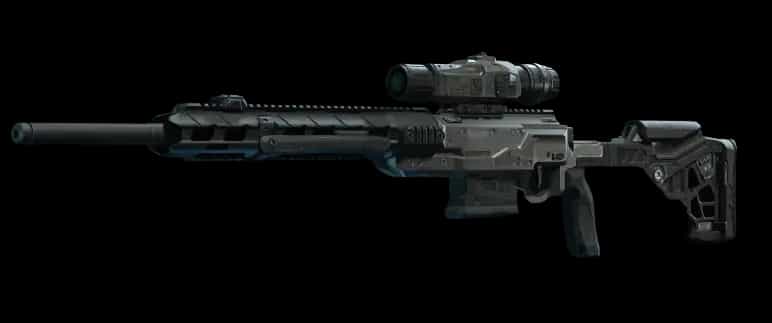
Strider 300 - New Loadout Sniper Warzone Season 5
MODS
GUIDE
Best Strider-300 Loadout for Warzone: A Fast, Hard-Hitting Sniper Build
The Strider-300 is the kind of Warzone weapon that rewards disciplined positioning more than frantic aggression. Built around powerful .300 WM ammunition, it makes the most sense when you can create distance, watch rotations, and punish opponents who expose themselves for a little too long. This particular setup leans into that identity while removing some of the sluggishness that can make heavier long-range weapons frustrating when a fight suddenly speeds up.
Rather than loading the Strider-300 with nothing but stability attachments, this configuration mixes range-focused upgrades with faster handling. The result is a sniper setup suited to players who like controlling rooftops, ridgelines, windows, and long sightlines but still want enough responsiveness to relocate or snap onto a second target. It is not a weapon I would build around constant close-quarters pressure. Its value comes from forcing enemies to respect open space and making rotations considerably more dangerous for the opposing squad.
Best Loadout
The goal with this Strider-300 configuration is to preserve its long-range threat while making the weapon less cumbersome during real Warzone engagements, where staying scoped into one angle for thirty seconds is rarely an option.
| Attachment Slot | Selected Attachment |
|---|---|
| Barrel | 25" Bowen Grooved Barrel |
| Muzzle | Monolithic Suppressor |
| Magazine | Carnation Fast Mag |
| Fire Mods | .300 WM Overpressured |
| Rear Grip | Hatch Quick Grip |
Attachment Analysis
The 25" Bowen Grooved Barrel establishes the foundation of the build. A long barrel is exactly what I want on a weapon whose main job is challenging players across streets, fields, rooftops, and other exposed sections of the map. Combined with .300 WM Overpressured ammunition, the setup is clearly geared toward strong projectile performance, helping the Strider-300 feel more dependable when you have to lead a moving target or compensate for distance.
Adding the Monolithic Suppressor fits the same philosophy while giving the build a more discreet profile. Long-range sniping often creates an immediate counter-response: one shot goes out, and suddenly an entire enemy squad starts searching rooftops and windows for the shooter. Staying suppressed gives you a little more freedom to work an angle without advertising every engagement as aggressively. It also complements the range-oriented nature of the barrel and ammunition rather than pulling the weapon toward a role it was never designed to fill.
The interesting part of the setup comes from the Carnation Fast Mag and Hatch Quick Grip. Both help prevent the Strider-300 from feeling completely anchored to one position. A sniper can have excellent ballistic performance and still be awkward in Warzone if every reload or aiming transition seems to take forever. These attachments provide a useful counterweight to the heavier long-range components, allowing the weapon to retain a more responsive character when you need to break scope, move to another piece of cover, or prepare quickly after repositioning.
Taken together, the five attachments create a balanced sniper package rather than an extreme one-dimensional build. You are still prioritizing velocity, effective range, and the ability to threaten distant enemies, but you are not sacrificing every ounce of handling to get there. That distinction matters in squad fights, especially when the first shot does not immediately end the engagement and you have to react to opponents changing positions.
Gameplay Tips
With this Strider-300, I would spend more time thinking about where the next fight is going to happen than chasing whatever red dot appears closest. If a squad is rotating across an exposed road or moving between two buildings, that is the engagement I want. Set up slightly ahead of their route, keep enough cover to break line of sight after firing, and make them choose between slowing down or continuing through your angle.
I also would not stay attached to the same rooftop simply because the first shot connected. Sniper players become predictable very quickly. After one or two attempts from a window, head glitch, or rooftop edge, I prefer shifting several meters and reopening the fight from a different elevation or direction. The Monolithic Suppressor helps with that style because the enemy has less immediate information, but suppression is not invisibility. Once they know approximately where the shots are coming from, changing the angle matters more than firing another round from exactly the same spot.
Moving targets deserve a little patience. When an enemy is sprinting perpendicular to my sightline, I would rather wait for the cleaner moment than throw away ammunition on a low-percentage shot. Players often slow down near doors, buy stations, cover transitions, or while climbing. Those tiny pauses are where a weapon like the Strider-300 becomes much nastier. The Overpressured ammunition and long barrel support confident shots at distance, but good timing still does more work than trying to flick onto every silhouette you see.
The build becomes uncomfortable when a fight collapses into a staircase, bedroom, or narrow corridor. If an SMG player has already entered the building underneath me, I am not trying to prove the Strider-300 can solve the problem. That is when I would switch to the secondary weapon immediately, create space, or rotate out through another exit. A strong sniper setup does not need to win fights at five meters; it needs to prevent those fights from happening on the opponent's terms.
Resurgence changes my approach slightly because enemies reappear quickly and squads are more willing to push after seeing a teammate take damage. I would use the Strider-300 to create the opening rather than treating every knock as an invitation to sprint forward. Crack or down someone from a neighboring roof, let teammates apply pressure, then move only when the opposing squad has lost enough control of the area. The Carnation Fast Mag becomes particularly useful during these messy sequences because downtime between opportunities can cost you the next shot.
One habit I would keep with this build is reloading whenever the fight gives me a genuine pause instead of waiting until the magazine becomes a problem. Sniper engagements can change instantly: one enemy crosses, another appears behind him, and suddenly you need consecutive shots. Having the Fast Mag does not mean ammunition management stops mattering. It simply gives you a little more margin when the fight refuses to slow down.
Conclusion
The Strider-300 loadout built around the 25" Bowen Grooved Barrel, Monolithic Suppressor, Carnation Fast Mag, .300 WM Overpressured, and Hatch Quick Grip offers a smart blend of long-range authority and practical handling. It keeps the weapon focused on the sightlines where a heavy sniper should dominate while avoiding the excessively slow feel that can make repositioning painful.
For players who enjoy controlling rotations, catching enemies between cover, and opening squad fights from a safer distance, this configuration gives the Strider-300 a clear purpose. Treat every shot as part of a positioning battle rather than an excuse to remain scoped in forever, and the weapon becomes far more dangerous than its raw damage alone suggests.
PERKS & EQUIPMENT
- Drill Instructor
- Sprinter
- Adaptive
Equipment
- LethalCombat Axe
- TacticalStim Shot