Strider 300 - New Sniper Loadout WhosImmortal
MODS
GUIDE
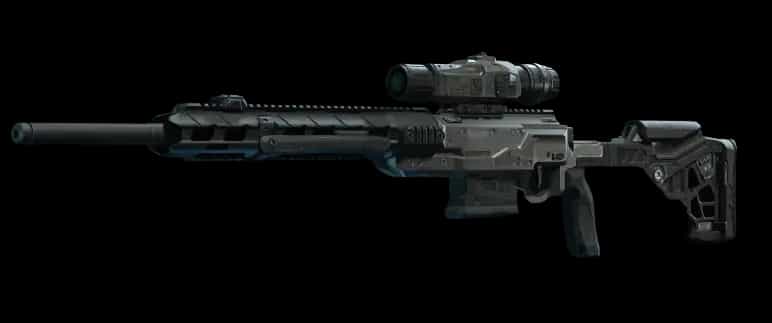
Best Strider 300 Loadout in Warzone for Long-Range Precision
The Strider 300 is the kind of Warzone sniper that rewards patience without forcing you into an entirely static playstyle. It has the power and long-range potential expected from a heavy precision rifle, but this particular setup is built to make the weapon feel less cumbersome between shots. Rather than stacking every possible attachment toward maximum stability, the build combines improved projectile performance with faster handling and reload characteristics. That balance suits players who enjoy controlling rooftops, punishing exposed rotations, and taking repeated shots at squads without spending too much time locked into one position.
What makes the Strider 300 particularly interesting is the way it can dictate fights before the enemy squad gets close enough to use its preferred weapons. A strong opening shot can remove plates, force a player behind cover, or create a temporary numbers advantage for your team. With this configuration, I would treat it as a precision weapon for deliberate engagements rather than something designed purely for extreme-distance stationary sniping. It still reaches comfortably across large sections of the map, but the quicker supporting attachments give you more freedom to reposition and react after firing.
Best Loadout
This setup focuses on maintaining the Strider 300's long-range threat while reducing some of the downtime that normally comes with a heavy sniper rifle. The barrel, suppressor, and ammunition strengthen its ranged performance, while the magazine and rear grip keep the weapon from feeling unnecessarily slow when a fight becomes more active.
| Attachment Slot | Selected Attachment |
|---|---|
| Barrel | 25" Bowen Grooved Barrel |
| Muzzle | Monolithic Suppressor |
| Magazine | Carnation Fast Mag |
| Rear Grip | Hatch Quick Grip |
| Fire Mods | .300 WM Overpressured |
Attachment Analysis
The foundation of the build is the pairing of the 25" Bowen Grooved Barrel and .300 WM Overpressured ammunition. On a sniper rifle, projectile behavior matters enormously because every additional fraction of a second in travel time makes moving targets more difficult to read. Strengthening the Strider 300's long-distance characteristics makes shots across open terrain more predictable, particularly when an opponent is sprinting between buildings or trying to rotate from one ridge to another. It also allows the rifle to retain the deliberate, heavy-hitting identity that makes it worth carrying in the first place.
Adding the Monolithic Suppressor complements that approach by keeping the weapon suited to controlled engagements where giving away your exact position can quickly become dangerous. A sniper shot naturally attracts attention, especially from nearby squads scanning for a third-party opportunity. Staying suppressed gives you a little more freedom to fire, shift position, and look for a second angle rather than immediately becoming the obvious target for everyone within sight.
The more unusual part of the configuration comes from the Carnation Fast Mag and Hatch Quick Grip. Instead of spending all five slots turning the rifle into an increasingly heavy long-range platform, these attachments address its usability. Faster weapon handling and reduced reload downtime matter when a squad fight develops quickly. Missing one shot is manageable; missing a shot and then being trapped in a sluggish weapon animation while an enemy changes cover is much more frustrating. Together, these attachments make the Strider 300 more comfortable during repeated engagements without sacrificing the ballistic improvements supplied by the rest of the setup.
Gameplay Tips
With this build, I would resist the temptation to take every shot simply because someone appears in the scope. A player sprinting through open ground is worth challenging when you have a clean angle, but firing at someone repeatedly shoulder-peeking a tiny piece of cover often achieves little beyond advertising your location. I prefer waiting for the moment when the opponent commits to movement. Someone jumping from a rooftop, crossing a road, climbing a ladder, or rotating away from the gas gives you a much more valuable window.
The Fast Mag changes how aggressively I would treat follow-up engagements. Suppose you crack one player while another member of the squad starts crossing behind them. Rather than obsessively chasing the first target behind cover, I would immediately look for the second. Snipers create pressure through uncertainty: once two players have taken heavy damage, the entire squad tends to slow down. That is often more useful than repeatedly firing into the same head glitch hoping for a finish.
Positioning matters even more after the first couple of shots. On a rooftop, I would avoid repeatedly exposing myself from the exact same corner. Fire from one side, move behind cover, and reappear from another angle when possible. The suppressor helps, but it does not make you invisible. Experienced players can still work out where the shots are coming from, and another sniper only needs one predictable re-peek to punish you.
I also wouldn't force the Strider 300 into building fights. If an SMG player suddenly appears ten metres away, the correct decision is usually to swap weapons rather than trying to manufacture a heroic quickscope. The Hatch Quick Grip makes the rifle less awkward, but it does not change its job. In Resurgence especially, where enemies can collapse on a position very quickly, I'd carry something responsive as the secondary and switch early when footsteps start getting louder.
Battle Royale gives this setup more room to breathe. During late rotations, I would use high ground or the edge of strong cover to watch the routes other squads are being forced to take. One accurate hit on a player crossing an exposed hillside can stall an entire team's movement. Just remember that a cracked enemy disappearing behind a rock is not automatically an invitation to chase. Sometimes the better decision is to hold the angle and wait for their teammate to make the next mistake.
Conclusion
The Strider 300 loadout works because it preserves the rifle's long-range authority without turning it into an unnecessarily slow specialist weapon. The Bowen Grooved Barrel, Monolithic Suppressor, and Overpressured ammunition give it the characteristics needed for demanding ranged shots, while the Carnation Fast Mag and Hatch Quick Grip make the rifle easier to manage when engagements become less predictable.
For players who prefer thoughtful positioning, clean sightlines, and controlled pressure rather than constant close-range aggression, this version of the Strider 300 offers a strong middle ground. Set up your angle, choose the valuable shot rather than the first available one, and let impatient enemies expose themselves while trying to move.
PERKS & EQUIPMENT
- Scavenger
- Sprinter
- Tempered
Equipment
- LethalCombat Axe
- TacticalStim Shot