TOP Resurgence Loadout - Warzone Season 6 - Strider 300
MODS
GUIDE
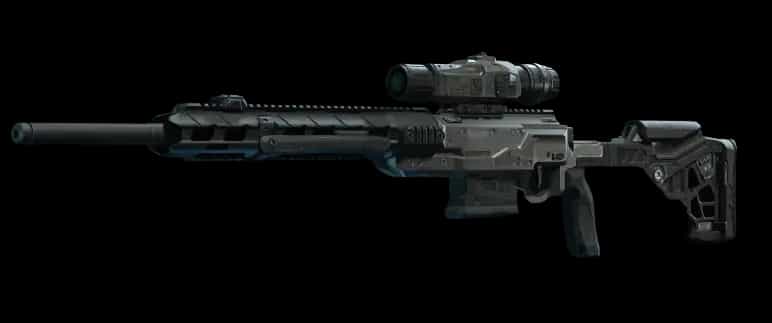
Best Strider 300 Loadout for Warzone: A Heavy-Hitting Long-Range Build
The Strider 300 is built for players who would rather win a fight with one well-timed shot than spray half a magazine across the map. With the right attachments, this weapon can become a serious long-range threat in Warzone, combining strong projectile performance with enough handling speed to keep it from feeling excessively cumbersome.
This particular setup leans into what the Strider 300 already does well. The 25" Bowen Grooved Barrel and .300 WM Overpressured ammunition push the build toward ranged engagements, while the Monolithic Suppressor keeps shots suppressed. Rather than stacking every attachment into raw accuracy or stability, the Hatch Quick Grip and Carnation Fast Mag give the weapon some much-needed practicality when fights become faster or multiple enemies are involved.
It is not a build I would treat like an aggressive all-purpose rifle. The Strider 300 rewards positioning, patience and good target selection. Give yourself space, find useful sightlines and let the weapon's stopping power do the work.
Best Loadout
This Strider 300 configuration is designed around long-range pressure without completely sacrificing responsiveness. You still need to respect the heavier nature of the weapon, but the handling-focused attachments make it considerably easier to work with during real Warzone engagements.
| Attachment Slot | Selected Attachment |
|---|---|
| Muzzle | Monolithic Suppressor |
| Rear Grip | Hatch Quick Grip |
| Magazine | Carnation Fast Mag |
| Barrel | 25" Bowen Grooved Barrel |
| Fire Mods | .300 WM Overpressured |
Attachment Analysis
The backbone of this setup is the combination of the 25" Bowen Grooved Barrel and .300 WM Overpressured ammunition. For a weapon intended to challenge enemies across large sections of the map, projectile performance matters enormously. A build can hit incredibly hard on paper, but that advantage means much less if you constantly have to compensate for slow rounds against targets sprinting between cover.
The longer barrel reinforces the Strider 300's ranged identity, while the Overpressured rounds further support engagements where bullet travel becomes noticeable. Together, they encourage deliberate shots against exposed opponents rather than hurried attempts to force the weapon into distances where a faster firearm would be more comfortable.
The Monolithic Suppressor fits naturally into that philosophy. Suppression is particularly valuable on a weapon that can attract attention every time it fires. In squad modes, giving away a strong firing position can quickly turn a favorable rooftop or hillside into a problem, especially when several teams are rotating through the same area. The suppressor lets the Strider 300 maintain a more discreet presence while complementing its long-range configuration.
What prevents the setup from becoming too one-dimensional is the handling side of the build. The Hatch Quick Grip helps offset some of the sluggishness associated with a long-range configuration, making the weapon more manageable when you need to acquire a target quickly. The Carnation Fast Mag follows the same logic from a different angle: downtime matters. Missing your opportunity because you're stuck in a lengthy reload can be brutal when another member of an enemy squad suddenly appears.
The result is a Strider 300 that remains specialized without becoming awkward. It still asks you to respect its intended engagement profile, but you have more freedom to react when a clean, static long-range fight turns into something messier.
Gameplay Tips
One mistake I'd avoid with this Strider 300 is chasing every cracked opponent. Imagine tagging someone who is crossing between two buildings and watching them disappear behind a wall with almost no armor left. The temptation is to sprint forward and finish the kill. With this weapon, I'd usually hold the angle for another second and see what happens. Their teammate may expose themselves attempting to cover the retreat, and suddenly you've been given a better shot without surrendering your position.
Moving targets are where the .300 WM Overpressured setup becomes especially interesting. When someone is sprinting across open terrain, parachuting toward cover or rotating along a hillside, I'd prioritize a clean lead rather than firing immediately. The Strider 300 isn't a weapon where frantic follow-up shots should be Plan A. Make the first opportunity count.
Rooftops can be excellent positions, but I wouldn't sit on the same head-glitch indefinitely. Suppressed fire helps, yet repeated shots still give experienced squads enough information to work out roughly where the pressure is coming from. Fire, shift a few metres, change elevation if possible, then reopen the angle. Even a small reposition can make the enemy's return shot land where you were rather than where you are.
The Carnation Fast Mag also changes how aggressively I'd manage downtime. If a squad is pinned behind rocks and I've already spent several rounds, I'd rather reload while they're contained than wait until somebody starts moving. Having ammunition ready for that three-second crossing opportunity is far more valuable than squeezing out one unnecessary extra shot.
Things become much uglier when an SMG player suddenly appears inside your building. I wouldn't try to prove a point with the Strider 300. Swap weapons. A long-range specialist should be paired with something capable of handling staircases, bedrooms and sudden pushes. Trying to force the Strider into a frantic close-range duel wastes the advantage you built the entire loadout around.
Resurgence naturally demands quicker decisions because enemies return faster and fights collapse into each other. Here I'd use the Strider 300 more as an opening weapon: create a knock or strip armor before teammates close the distance. In Battle Royale, I'd be happier letting the rifle dictate an entire rotation, especially when the next zone forces enemies through exposed ground.
There is also value in not shooting. If two enemies are running toward cover and neither has spotted you, waiting half a second for the easier target can be the difference between starting the fight with a knock and merely announcing your position. With a weapon like the Strider 300, that decision matters more than trying to fire as quickly as possible.
Conclusion
The Strider 300 works best when its loadout has a clear purpose, and this configuration gives it one: punish enemies who expose themselves at range while retaining enough handling utility to deal with the unpredictable pace of Warzone.
The Monolithic Suppressor, 25" Bowen Grooved Barrel and .300 WM Overpressured ammunition form the long-range core, while the Hatch Quick Grip and Carnation Fast Mag keep the weapon from becoming unnecessarily cumbersome. It won't replace a close-range secondary, nor should it.
Build your fights around sightlines, rotations and exposed targets, though, and the Strider 300 becomes exactly the kind of weapon that can make an enemy squad regret crossing fifty metres of open ground.
PERKS & EQUIPMENT
- Drill Instructor
- Sprinter
- Adaptive
Equipment
- LethalCombat Axe
- TacticalStim Shot