VS Recon - Loadout One Shot Season 5 Warzone
MODS
GUIDE
Best VS-Recon Loadout in Warzone for Long-Range Control
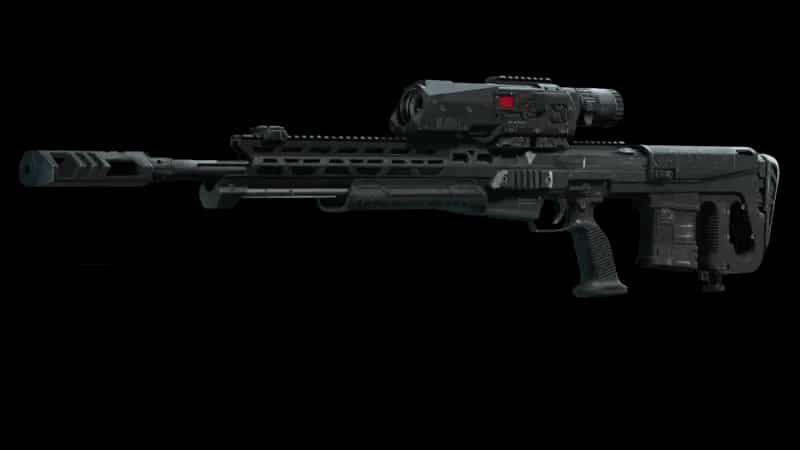
The VS-Recon is the kind of Warzone weapon that rewards players who would rather control a fight than rush blindly into it. With the right attachments, it becomes a composed long-range platform built around strong bullet velocity, manageable recoil, and the consistency needed to punish enemies during rotations. This setup leans heavily into those qualities, giving the rifle a stable firing profile without turning it into something painfully slow or awkward to reposition with.
Its biggest appeal is how comfortably it fits into a deliberate Battle Royale loadout. The VS-Recon can pressure players crossing exposed terrain, challenge opponents from rooftops, and keep squads pinned when they are trying to move between cover. It is not a weapon I would build around aggressive room clearing, but paired with a capable SMG or another fast close-range secondary, it gives you a very dependable answer for most medium-to-long-range engagements.
Best Loadout
This configuration focuses on extending the VS-Recon's effective reach while improving the consistency of sustained fire. Recoil management is a major priority, but the build also adds velocity and keeps the weapon suppressed, which matters enormously when taking repeated shots from a strong position.
| Attachment Slot | Selected Attachment |
|---|---|
| Barrel | 23" G-Force Barrel |
| Muzzle | Monolithic Suppressor |
| Underbarrel | MFS R-Stop Handguard |
| Fire Mods | 7.62 NATO Overpressured |
| Rear Grip | R-1 Sheif Grip |
Attachment Analysis
The 23" G-Force Barrel and 7.62 NATO Overpressured ammunition form the long-range backbone of the setup. Together, they push the VS-Recon toward the type of engagements where predictable projectile behavior matters more than raw mobility. Faster bullets make distant targets easier to track because less lead is required against enemies sprinting across roads, jumping between pieces of cover, or dropping from rooftops. The extended barrel also helps the rifle feel more purposeful once the fight moves beyond typical assault-rifle distance.
Adding the Monolithic Suppressor complements that approach extremely well. Staying suppressed is valuable whenever you are firing from rooftops, hillsides, windows, or other positions you do not want to reveal immediately. In squad fights, being able to damage or down one opponent without broadcasting your exact firing point gives you more room to keep applying pressure before the enemy understands where the shots are coming from.
The MFS R-Stop Handguard and R-1 Sheif Grip are what keep the rest of the package under control. A long-range rifle can have impressive theoretical damage, but that means very little if the reticle constantly drifts away from the target after the first few rounds. These attachments make the VS-Recon easier to settle during sustained bursts and reduce the amount of correction needed when tracking a moving player. Rather than chasing maximum speed, this setup prioritizes repeatable accuracy, which is a much better trade when the rifle's job is to win fights over distance.
There is still a price to pay. A build carrying a long barrel, suppressor, and several control-focused parts will never feel as reactive as a lightweight close-range configuration. ADS transitions and emergency handling are not the reason to use it. What you gain instead is a rifle that feels far more comfortable when you already have the angle, anticipate the enemy's movement, and can begin firing before they close the gap.
Gameplay Tips
One habit I would build around immediately is pre-aiming likely movement routes instead of reacting after an opponent appears. Imagine holding a rooftop while another team has to cross a street below. With this VS-Recon setup, I would rather have my sight positioned at the edge of the nearest piece of cover and wait for the rotation than constantly scan the entire skyline. The velocity and stability are much more valuable when the first bullet is already going where you expect the enemy to be.
I would also resist the temptation to chase every cracked player. Getting an armor break at 60 or 70 metres does not automatically mean sprinting forward is the right decision. If the opponent disappears behind a building, holding the angle can be stronger than abandoning your position. Their teammates may try to cross, peek the same corner, or move toward the downed player's cover, and the VS-Recon is much more dangerous when you force enemies to enter your sightline.
Things get uncomfortable quickly when an SMG user surprises you inside a staircase or cramped room. I would not try to force the rifle through those engagements unless the enemy is already weak. Swap weapons early. That sounds obvious, but slower long-range builds punish hesitation: waiting until someone is already sliding through the doorway before changing to your secondary usually gives away the fight.
The rifle also suits open-ground rotations particularly well. If another squad is running across a field or leaving the gas with limited cover, I would focus on one player rather than spreading damage across three targets. Stable follow-up shots give you a realistic chance of converting pressure into a down, and one downed enemy can completely disrupt a team's rotation. A few random armor hits rarely have the same impact.
In Resurgence, I would play the VS-Recon from positions that still leave a fast escape route. Rooftops and upper floors are useful, but sitting on one angle for too long invites a coordinated push. Fire, reposition to another window or piece of cover, then re-engage from a slightly different line. The suppressor helps here because opponents cannot always identify the new firing position immediately.
Battle Royale gives the weapon more room to breathe. Longer sightlines and slower rotations create situations where the VS-Recon can repeatedly pressure the same squad. I would keep an eye on ammunition, though, because this kind of setup encourages sustained fire at targets that are not always guaranteed downs. There is no reason to burn through an entire reserve shooting at someone repeatedly disappearing behind rocks 150 metres away.
One small decision matters more than it seems: after winning a ranged exchange, reload before changing position whenever the situation allows it. Getting caught halfway through the next fight with a partially depleted magazine is exactly the sort of avoidable mistake a methodical rifle like this exposes.
Conclusion
This VS-Recon Warzone loadout is built for players who value accuracy, positioning, and reliable long-range pressure over aggressive handling. The 23" G-Force Barrel and Overpressured ammunition improve its performance across distance, while the Monolithic Suppressor helps preserve firing positions and the MFS R-Stop Handguard and R-1 Sheif Grip keep the rifle composed through follow-up shots.
It works best when you treat the VS-Recon as a weapon for controlling space rather than chasing every elimination. Pair it with a strong close-range secondary, choose your firing lanes carefully, and the build becomes particularly effective at punishing rotations, holding rooftops, and forcing enemy squads to reconsider how they move through exposed areas.
PERKS & EQUIPMENT
- Scavenger
- Sprinter
- Tempered
Equipment
- LethalCombat Axe
- TacticalStim Shot