VS Recon - Loadout WhosImmortal
MODS
GUIDE
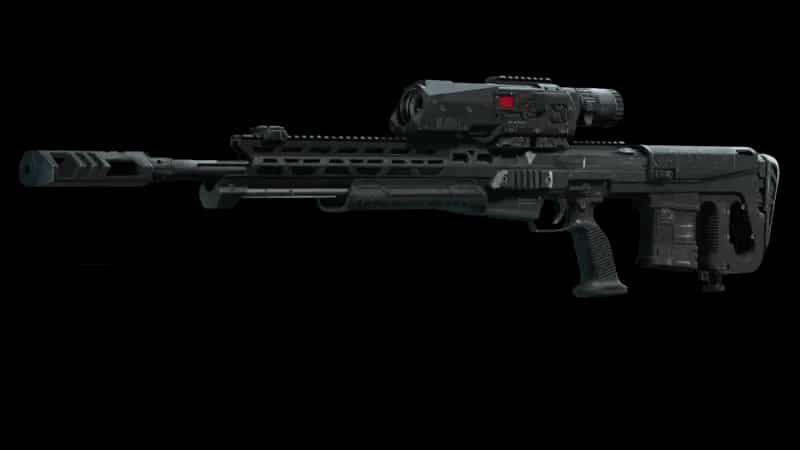
Best VS Recon Loadout in Warzone for Long-Range Control
The VS Recon is the kind of Warzone weapon that rewards patience, clean positioning, and disciplined bursts rather than frantic aggression. With the right attachments, it becomes a highly dependable option for players who prefer controlling lanes, punishing exposed rotations, and keeping enemy squads under pressure from a comfortable distance. This setup leans heavily into stability, bullet performance, and recoil management, turning the VS Recon into a weapon that feels much more composed when fights stretch beyond typical assault-rifle range.
What makes this build particularly appealing is its consistency. The VS Recon is not designed to replace an SMG inside cramped buildings, nor should it be treated like a lightweight rifle built for constant sprinting. Instead, it suits a deliberate Battle Royale playstyle where holding advantageous terrain and landing repeatable shots matters more than raw mobility. If you enjoy playing rooftops, ridgelines, windows, or power positions overlooking rotations, this configuration gives the weapon the characteristics it needs to capitalize on those situations.
Best Loadout
This setup focuses on improving the VS Recon's long-range effectiveness while keeping recoil predictable enough to maintain pressure on moving targets.
| Attachment Slot | Selected Attachment |
|---|---|
| Barrel | 23" G-Force Barrel |
| Muzzle | Monolithic Suppressor |
| Fire Mods | 7.62 NATO Overpressured |
| Rear Grip | R-1 Sheif Grip |
| Underbarrel | MFS R-Stop Handguard |
Attachment Analysis
The 23" G-Force Barrel establishes the direction of the entire build. A long-range configuration benefits enormously from stronger ballistic performance and a steadier firing profile, especially when opponents are moving between pieces of cover rather than standing still. Combined with 7.62 NATO Overpressured, the setup is geared toward making shots feel more immediate over distance, reducing the amount of correction required when tracking enemies crossing roads, courtyards, or open hillsides.
The Monolithic Suppressor complements that approach by keeping the weapon better suited to sustained ranged engagements without forcing you to advertise every firing position unnecessarily. Suppression is particularly valuable with a rifle such as the VS Recon because you may spend several seconds working the same angle. Remaining harder to pinpoint gives you more freedom to fire, adjust slightly, and challenge again instead of immediately abandoning a strong position.
Recoil management comes primarily from the relationship between the MFS R-Stop Handguard and R-1 Sheif Grip. Rather than chasing maximum mobility, this pairing supports the controlled feel that a precision-oriented VS Recon needs. When several rounds are fired consecutively, a predictable weapon is far more useful than one with slightly faster handling but inconsistent movement. The result is a setup that encourages controlled follow-up shots and makes it easier to stay centered on armored targets after the first hit.
There is an obvious trade-off. A build carrying a 23-inch barrel and several control-focused attachments is unlikely to feel exceptionally nimble. ADS transitions and aggressive room-clearing are not its strongest qualities. That is acceptable here because the attachments are working toward one clear objective: giving the VS Recon a stable platform for medium-to-long-range fights where accuracy, velocity, and repeatable recoil behavior have more influence than sprint-to-fire speed.
Gameplay Tips
One thing I would avoid with this configuration is chasing every armor crack. It can be tempting to hit someone hard at range and immediately sprint after them, but the VS Recon gets much of its value from forcing opponents to move through bad terrain. If I crack a player behind a rock 70 meters away, I would rather hold the route toward their next piece of cover than abandon my position and turn the fight into a close-range coin flip.
Crossing enemies are where I would try to extract the most value from the build. Picture a squad leaving a building to rotate across an exposed road: that is exactly the moment to settle the aim, lead the first target slightly, and keep firing without making oversized corrections. The stronger ballistic setup should make those engagements more forgiving than they would be with a mobility-focused configuration. I would prioritize the player furthest from cover rather than automatically shooting whoever appears first.
Rooftops also suit the VS Recon, but I would resist sitting on the exact same head-glitch after every burst. Fire enough shots and even suppressed weapons attract attention. Moving five or ten meters to a different section of the roof can completely change the return angle when an enemy tries to challenge. With a stable rifle, small positional adjustments are often more valuable than frantic movement because you want to preserve the range advantage.
Inside buildings, the calculation changes quickly. If an SMG player suddenly appears at the top of a staircase, I would not expect this setup to rescue a badly timed push. A faster secondary is almost mandatory. The VS Recon should be ready before the fight develops; pre-aiming a doorway from across a room is reasonable, sprinting directly through it with this rifle raised is much less convincing.
In Resurgence, I would use the weapon from slightly more active positions because enemies return quickly and fights overlap. Instead of anchoring one rooftop for several minutes, I would move between nearby power positions and use the VS Recon to weaken players before teammates close the gap. Battle Royale gives you more freedom to work distant sightlines patiently, especially during late rotations when teams are forced out of cover.
There is also a small habit that matters with a rifle like this: after downing someone at distance, I would check the surrounding angle before committing more ammunition to the finish. Their teammate is often already looking toward the tracer path or the window you fired from. Keeping enough rounds available for that second target is usually more valuable than securing the elimination half a second sooner.
Conclusion
The VS Recon becomes a far more convincing Warzone option when it is built around what it naturally does well. The 23" G-Force Barrel, Monolithic Suppressor, 7.62 NATO Overpressured rounds, R-1 Sheif Grip, and MFS R-Stop Handguard create a controlled long-range package centered on steady recoil and reliable ballistic performance.
It will not be the weapon I would choose for reckless building pushes or constant close-range pressure, but that is not the purpose of this configuration. Give it space, hold disciplined angles, and force opponents to cross your line of fire. For players who prefer winning engagements through positioning and accurate follow-up shots rather than pure speed, this VS Recon loadout is well worth putting into a Warzone class.
PERKS & EQUIPMENT
- Scavenger
- Sprinter
- Tempered
Equipment
- LethalSemtex
- TacticalStim Shot