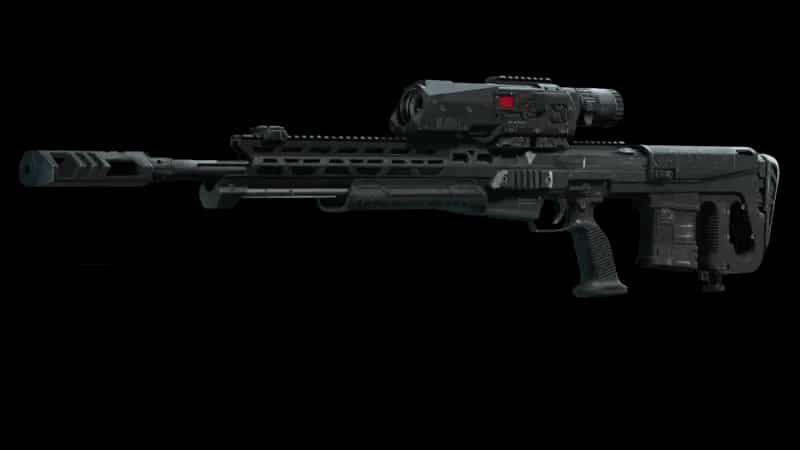
VS Recon - WhosImmortal Loadout
MODS
GUIDE
Best VS Recon Loadout in Warzone for Controlled Long-Range Fights
The VS Recon is the kind of Warzone weapon that rewards patience more than frantic movement. Its value comes from being able to keep pressure on enemies across medium and longer sightlines without forcing you to fight the gun after every shot. With the right attachments, it becomes a composed, hard-hitting option for players who prefer controlling rooftops, punishing rotations, and supporting squad pushes from a little farther back.
This setup leans heavily into that identity. Instead of trying to turn the VS Recon into something unnaturally fast, the build strengthens its range performance, recoil behavior, and projectile consistency. It works particularly well for players who are comfortable pre-aiming likely angles and choosing their engagements instead of sprinting directly into every building.
Best Loadout
The following configuration focuses on making the VS Recon more dependable once the fight stretches beyond typical close-range territory.
| Attachment Slot | Selected Attachment |
|---|---|
| Muzzle | Monolithic Suppressor |
| Rear Grip | R-1 Sheif Grip |
| Underbarrel | MFS R-Stop Handguard |
| Barrel | 23" G-Force Barrel |
| Fire Mods | 7.62 NATO Overpressured |
Attachment Analysis
What stands out about this VS Recon build is how strongly the attachments reinforce one another rather than pulling the weapon in several directions. The Monolithic Suppressor and 23" G-Force Barrel form the foundation, pushing the setup toward more dependable ranged engagements while keeping your firing position less obvious. For a weapon that naturally benefits from controlled sightlines, staying suppressed is especially useful when you are shooting into teams rotating through exposed areas.
The longer barrel also complements the 7.62 NATO Overpressured ammunition. Faster, more consistent projectile travel becomes increasingly valuable when targets are running sideways across roads, jumping between rooftop cover, or trying to reach the next piece of terrain during a late-circle rotation. You still need to lead distant targets, but the build reduces the amount of correction required compared with a setup centered entirely on handling speed.
Recoil management comes from the interaction between the MFS R-Stop Handguard and R-1 Sheif Grip. Their role is particularly noticeable once you need to maintain several accurate shots rather than simply landing the opener. The VS Recon becomes easier to settle during sustained fire, which helps when an opponent survives the initial damage and immediately begins strafing or diving toward cover.
There is an obvious trade-off. A configuration built around a large barrel, suppression, and stability is unlikely to feel exceptionally snappy when somebody suddenly appears three metres away. That is not really a flaw in the concept, though. The attachments are designed to make the VS Recon trustworthy in the fights you should deliberately be taking with it rather than pretending it can replace a dedicated close-range secondary.
Gameplay Tips
One situation where I’d want this build is when my squad already owns a strong rooftop or elevated window and another team has to move. I wouldn’t rush the first shot just because someone appears in the open. I’d rather wait until they are committed to the crossing, then use the improved stability and bullet velocity to keep connecting while their available cover disappears behind them. The VS Recon is much more threatening when enemies cannot instantly reverse their rotation.
Inside buildings, I’d be far more cautious. If footsteps suddenly appear on the floor below, this is not the weapon I’d trust for blindly jumping a staircase. I’d hold a doorway or head-glitch, make the opponent enter my crosshair, and switch to an SMG if the engagement collapses into true close quarters. Trying to force a heavy ranged setup through tight rooms wastes what the build does well.
Moving enemies are where the 7.62 NATO Overpressured rounds become especially useful. Imagine a player jumping from one rooftop to another after being cracked. I’d keep the crosshair slightly ahead of the landing path rather than chasing their character model with aggressive corrections. Because the build is relatively composed, smaller movements tend to work better than dragging the aim around and constantly resetting.
There is also a difference between damaging someone and having a realistic opportunity to finish them. If an opponent gets cracked behind a rock 70 metres away, I wouldn’t automatically abandon good positioning to chase. The suppressor lets you continue applying pressure without advertising your location as aggressively, and sometimes forcing that player to burn plates while their teammates reposition is more valuable than turning one knock attempt into a bad push.
Resurgence naturally creates more chaotic situations, so I’d shorten the distances slightly and play near teammates who can handle the first contact indoors. The VS Recon can be excellent from an adjacent rooftop, balcony, or upper floor while the rest of the squad applies pressure below. In Battle Royale, I’d be happier giving the weapon more space and using it during rotations, especially when the circle forces teams through predictable terrain.
One habit I’d avoid is emptying ammunition into tiny targets simply because the gun feels stable enough to do it. Long-range suppression can be useful, but there is a difference between controlling a rotation and burning through reserves against someone barely visible behind cover. I’d save the sustained fire for moments when an enemy is actually exposed or when a teammate can capitalize on the damage.
The build also rewards getting your crosshair ready before the fight begins. When approaching a ridge, rooftop edge, or long street, I’d already be aiming close to where an enemy is likely to appear. If you are constantly reacting from a full sprint, the heavier nature of the setup becomes much more noticeable. Give yourself half a second of preparation and the VS Recon feels considerably more convincing.
Conclusion
This VS Recon Warzone loadout gives the weapon a clear purpose: controlled pressure from medium to long range. The Monolithic Suppressor and 23" G-Force Barrel strengthen its ranged profile, the R-1 Sheif Grip and MFS R-Stop Handguard help keep repeated shots manageable, and 7.62 NATO Overpressured ammunition improves the feel of engagements against targets moving across open ground.
It is not a build for charging every doorway or chasing every cracked enemy through a staircase. Use it to make rotations uncomfortable, punish exposed players, and support your squad from positions where the VS Recon has time to settle. Once you start treating positioning as part of the loadout rather than something separate from it, this configuration becomes much more dangerous.
PLAYSTYLE
One of the best sniper rifles in the current meta. Ideal for large maps like Verdansk.
PERKS & EQUIPMENT
- Mountaineer
- Sprinter
- Adaptive
Equipment
- LethalSemtex
- TacticalStim Shot