Hyeon Burst - New Loadout "Post Patch" - Modern Warfare 4
MODS
GUIDE
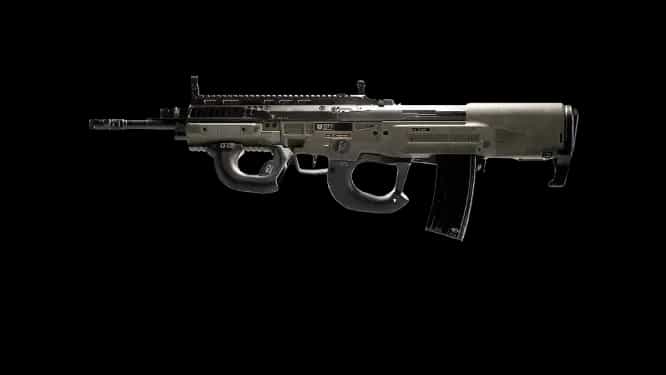
Best Hyeon-Burst Loadout in Modern Warfare 4 Season 1: Paradox's Hyperburst Build
The Hyeon-Burst offers a distinctive approach to assault rifle combat in Call of Duty: Modern Warfare 4 Season 1, and content creator Paradox has shared a configuration built around its Hyeon Hyperburst Apex attachment.
This six-component setup combines improved bullet velocity, suppression, and responsive handling to create a rifle suited to players who value accurate opening shots without sacrificing the ability to reposition quickly.
Rather than concentrating entirely on recoil reduction or maximum mobility, the build attempts to balance the Hyeon-Burst's unusual firing behaviour with the flexibility needed for Multiplayer engagements.
Best Hyeon-Burst Loadout for Modern Warfare 4 Season 1
Here is the complete Hyeon-Burst configuration shared by Paradox:
| Attachment Category | Attachment Name |
|---|---|
| Laser | SZ GEN.6 PEQ |
| Apex | Hyeon Hyperburst |
| Fire Mods | 6.8X43mm High Velocity |
| Muzzle | FSS IS300 |
| Rear Grip | X-Vector 799 Grip |
| Stock | Bal-202 Stock |
The configuration uses five standard attachments alongside the Hyeon Hyperburst Apex attachment, which occupies a separate slot.
Hyeon Hyperburst Changes the Weapon's Fighting Style
The defining component is undoubtedly the Hyeon Hyperburst Apex attachment.
This conversion introduces a rapid three-round opening burst followed by slower automatic fire, creating a firing pattern that rewards accurate initial targeting while retaining the option to continue shooting.
That distinction matters during mid-range engagements. Landing the opening burst reduces the need for extended follow-up fire, whereas missing those initial shots can leave the player managing the weapon's subsequent firing rhythm.
Community-reported attachment data also indicates that Hyperburst introduces additional horizontal recoil considerations. Consequently, controlled tracking becomes particularly important when sustaining fire beyond the opening burst.
The absence of a dedicated recoil-focused underbarrel makes this a configuration that rewards deliberate aim rather than relying entirely on mechanical stabilisation.
High Velocity Ammunition and the FSS IS300 Extend Its Reach
Two attachments give this build a stronger foundation for engagements beyond close range.
The 6.8X43mm High Velocity ammunition improves projectile velocity, making moving opponents easier to track at distance by reducing the amount of lead required.
Meanwhile, the FSS IS300 suppressor contributes sound suppression, improved effective range, and additional firing control.
Together, these components make sense for players who frequently challenge opponents across open lanes or hold angles between objectives.
However, the FSS IS300 introduces handling compromises, particularly in aiming responsiveness. Its benefits are therefore most relevant when the player has enough time to establish an angle rather than reacting to an unexpected close-range encounter.
Mobility Attachments Offset the Heavier Muzzle
Paradox's remaining attachment choices help prevent the configuration from becoming excessively stationary.
The X-Vector 799 Grip supports faster ADS and sprint-to-fire handling, while the SZ GEN.6 PEQ further improves responsiveness when bringing the weapon onto target.
The Bal-202 Stock complements those choices by supporting movement and mobility while aiming.
This combination creates an interesting balance: the ammunition and muzzle support controlled engagements, while the grip, laser, and stock help the player transition between positions without giving up too much responsiveness.
There are still limitations. The build retains the weapon's standard magazine rather than adding extra ammunition capacity, meaning missed opening bursts and prolonged fights can quickly increase the pressure to reload.
It also sacrifices an optic slot, leaving sight preference and visibility as considerations for players who regularly engage at longer distances.
How to Play With Paradox's Hyeon-Burst Build
This configuration makes the most tactical sense when used as a mobile, mid-range assault rifle rather than an all-out close-quarters weapon.
Prioritise positioning that allows you to acquire targets before committing to a fight. The rapid opening burst gives accurate players an opportunity to establish an advantage, while the mobility attachments make it easier to change angles after an engagement.
On objective-focused maps, the setup is particularly suited to defending approach routes, moving between cover, and challenging opponents crossing predictable sightlines.
Against highly mobile SMG users at extremely close range, maintaining separation and avoiding unnecessary hip-fire engagements may prove more reliable than attempting to match their movement.
The key is to make the opening burst count. Players who consistently centre their aim before firing should find the configuration more comfortable than those who rely on prolonged automatic spraying.
Is This Hyeon-Burst Loadout Worth Using?
Paradox's Hyeon-Burst configuration presents a balanced option for players who appreciate the weapon's burst-oriented identity but want additional mobility and projectile consistency.
Its strongest advantage is the relationship between the Hyperburst conversion, faster handling attachments, and range-focused ammunition. Its primary compromises are the absence of an extended magazine and dedicated recoil-control attachments.
For players comfortable with disciplined opening shots and frequent repositioning, this is a worthwhile Season 1 configuration to experiment with.
Source: Watch Paradox's original Hyeon-Burst loadout video on YouTube.
PERKS & EQUIPMENT
- Quick Fix
- Ninja
- Battle Hardened
Equipment
- LethalFrag Grenade
- TacticalFlash Grenade