Mammoth - Top Loadout (5 Attachments) for Multiplayer
MODS
GUIDE
Best Mammoth Loadout for Black Ops 7 Multiplayer
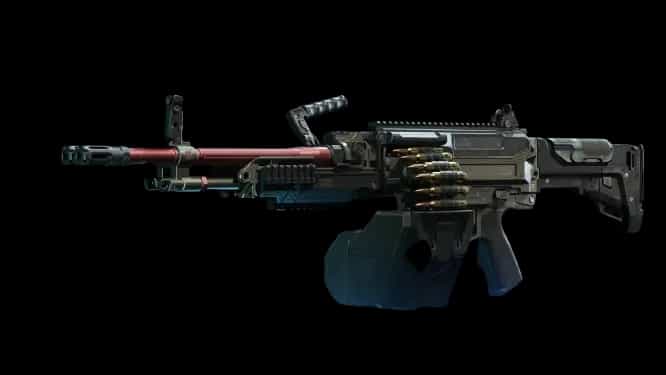
The Mammoth lives up to its name in Call of Duty: Black Ops 7 Multiplayer. It is a heavy, intimidating weapon designed to keep firing long after most opponents have been forced to reload. Its huge ammunition capacity and sustained damage make it especially effective when defending objectives, controlling busy lanes, or pressuring several enemies during the same engagement. The trade-off is predictable: this is not a lightweight run-and-gun weapon, and careless movement can leave you exposed before you have time to aim.
This build leans into the Mammoth’s natural strengths while making its handling more manageable. Rather than turning the weapon into something it is not, the attachments improve its stability, readiness, and consistency during prolonged firefights. It suits a deliberate player who understands spawn routes, anticipates enemy pushes, and prefers taking control of an area instead of constantly chasing the action.
Best Loadout
The following setup combines improved firing stability with better handling and an enormous ammunition reserve. It is built for objective modes and maps where enemies repeatedly challenge the same routes.
| Attachment Slot | Selected Attachment |
|---|---|
| Laser | 1 MW Instinct Laser Array |
| Underbarrel | Flowguard Grip |
| Rear Grip | Alliance Grip |
| Stock | Advantage Stock |
| Magazine | Formative Belt Fed |
Attachment Analysis
The Flowguard Grip forms the mechanical foundation of this Mammoth build. A weapon with such a heavy firing profile needs to remain controllable once the trigger has been held for more than a few rounds, particularly when an initial target is followed by another opponent entering the same lane. The grip helps keep sustained fire composed, reducing the amount of manual correction required as the engagement continues. Combined with the Advantage Stock, it gives the Mammoth a steadier, more predictable feel when tracking targets or making small adjustments around cover.
Handling support comes from the Alliance Grip and 1 MW Instinct Laser Array. The Mammoth will never behave like a compact SMG, but these attachments reduce some of the hesitation that usually accompanies a large weapon. That matters when moving between defensive positions or reacting to an unexpected opponent at short-to-medium range. The laser also improves confidence in hurried encounters, where there may not be enough time to settle into a perfect firing stance before returning fire.
The Formative Belt Fed completes the setup by significantly extending the period between reloads. This is more valuable than simply having a large number displayed on the ammunition counter. A belt-fed Mammoth can deny a doorway, cover a capture point, and immediately challenge a second wave without surrendering pressure. It also encourages controlled bursts rather than panic-firing: the reserve is generous, but disciplined shooting keeps the weapon accurate and prevents opponents from exploiting a poorly timed reload.
Together, these attachments create a build that becomes more threatening the longer a fight lasts. The stock and underbarrel keep the weapon settled, the grip and laser help it enter combat with less resistance, and the belt-fed magazine allows that improved performance to continue across multiple targets. It remains a heavy gun, but its weaknesses feel less intrusive when used with intelligent positioning.
Gameplay Tips
I’d build my route around cover before worrying about finding enemies. With the Mammoth, reaching the correct position is half the gunfight. On a Domination map, that could mean holding an angle overlooking B rather than standing directly on the flag. In Hardpoint, I’d often play just outside the hill, covering the doorway or lane that the opposing team is most likely to flood. The weapon’s sustained fire gives teammates room to capture while forcing enemies to slow down.
Pre-aiming is essential, but there is a difference between holding a likely entrance and staring at an empty corner for twenty seconds. I’d watch the minimap, track where teammates are spawning, and adjust the Mammoth toward the route that has just become vulnerable. If several friendly arrows disappear on one side of the map, I want the weapon raised before the enemy appears. Trying to react from a full sprint wastes the advantage this build provides.
The Formative Belt Fed changes how aggressively I would manage consecutive fights. After eliminating one opponent, I would not automatically retreat to reload as I might with an assault rifle. Instead, I’d expect a second player to trade the kill and keep the crosshair near the same entry point. That is particularly effective around headquarters, control zones, and narrow interior lanes, where squads tend to arrive in clusters rather than isolated one-on-one challenges.
A fast enemy sliding through a doorway is still a problem. The laser and handling attachments offer some protection, but they do not erase the Mammoth’s weight. If an SMG player gets inside arm’s reach, I’d avoid stubbornly committing to a slow aim-down-sights animation. Use available movement, fire immediately if the target is already centered, or switch to a dependable secondary. Better yet, position far enough from the entrance that the opponent has to cross visible space before reaching you.
Against moving targets at medium range, I’d resist dragging the trigger endlessly after missed opening shots. Briefly release it, reset the reticle, and begin another controlled burst. The Mammoth’s capacity can tempt players into spraying because ammunition seems unlimited, yet accuracy still decides the engagement. Sustained fire is most valuable when it pins enemies behind cover or transfers cleanly between targets—not when half the belt is decorating a wall.
There is also a psychological advantage to using the weapon around objectives. Continuous fire can make opponents hesitate, especially when they know a reload is unlikely to arrive soon. I’d use that hesitation to reposition a few metres, change elevation, or prepare for a flank. Staying attached to one head glitch for too long invites grenades and coordinated pushes. The Mammoth controls space well, but it works even better when the enemy cannot predict which piece of cover the next burst will come from.
Conclusion
This Mammoth loadout delivers exactly what a heavy weapon should: stable fire, dependable control, improved combat readiness, and enough ammunition to survive chaotic multi-enemy pushes. The Flowguard Grip and Advantage Stock keep its power manageable, while the Alliance Grip and Instinct Laser prevent the handling from becoming excessively cumbersome. With the Formative Belt Fed supplying relentless pressure, the build can become a genuine problem around contested objectives. Give it a disciplined position, read the enemy’s approach, and let them discover why challenging the same lane twice is a bad idea.
PERKS & EQUIPMENT
- Dexterity
- Assassin
- Ninja
Equipment
- LethalCombat Axe
- TacticalStim Shot