Patriot XMR - Best Loadout for Beta MW4
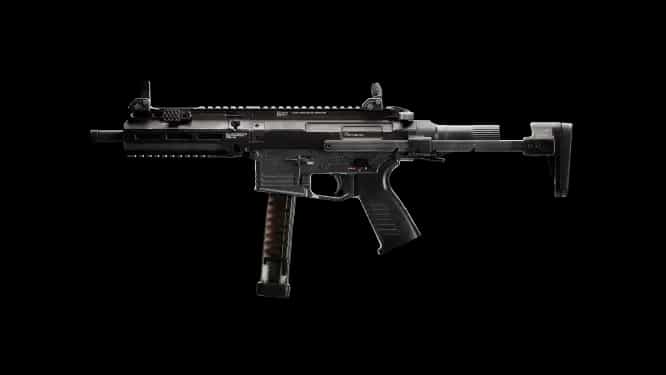
MODS
GUIDE
Best ISO Nightshade Loadout for Modern Warfare 4 (2026) Multiplayer
The ISO Nightshade is built for players who refuse to let the fight settle. It thrives when you move quickly between lanes, pressure weakened opponents, and challenge enemies before they can establish a comfortable firing position. Its compact profile makes it naturally suited to aggressive multiplayer routes, but the weapon becomes far more dependable when its speed is balanced with enough control to handle targets beyond immediate close range.
This ISO Nightshade setup leans heavily into responsive handling without turning the weapon into an uncontrollable spray machine. Faster reactions, sharper movement and improved firing stability make it a strong option for objective players, flankers and anyone who prefers to dictate the pace of a match. It is not designed to replace an assault rifle across an entire map. Instead, it gives you the tools to dominate the spaces where most multiplayer gunfights are actually decided.
Best Loadout
The attachments below create a fast, flexible ISO Nightshade that remains manageable during sustained fire. The build works especially well on compact and medium-sized maps where engagements can shift from a narrow interior to an open lane within seconds.
| Attachment Slot | Selected Attachment |
|---|---|
| Rear Grip | Demo STP-1 |
| Barrel | ZLR Carbon-900 |
| Muzzle | TA Lightning R3M |
| Stock | EXP G2-44 Stock |
| Laser | XRK Clutch-LS |
Attachment Analysis
The ZLR Carbon-900 provides the foundation for the build by refining the ISO Nightshade’s performance beyond point-blank distance. A mobile weapon still needs enough consistency to finish an opponent retreating across a courtyard or appearing at the far end of a corridor. Paired with the TA Lightning R3M, the barrel helps produce a cleaner and more predictable firing pattern, reducing the amount of manual correction required during longer bursts.
That control matters because the remaining attachments encourage a much more active style. The Demo STP-1 and EXP G2-44 Stock sharpen the weapon’s handling characteristics, allowing it to feel responsive when raising the sights after sprinting, changing direction or leaving cover. The ISO Nightshade becomes particularly effective during short transitions: sliding past a doorway, snapping toward a second enemy or quickly re-centering after winning the opening duel.
The XRK Clutch-LS completes the package by supporting the speed expected from an aggressive build. Its contribution to aiming responsiveness makes the weapon less awkward when an opponent appears unexpectedly, while the added stability helps prevent that speed from becoming wasted movement. The result is a setup that feels lively but still controlled—a useful distinction when fighting players who strafe aggressively or repeatedly shoulder cover.
There is a deliberate trade-off here. Without an extended magazine or dedicated optic, the build prioritizes immediate combat performance over sustained squad-clearing potential and visual comfort. The standard sights must therefore suit the player, and missed shots carry a greater cost. In return, the ISO Nightshade remains light, quick and adaptable, with enough recoil management to contest the middle portion of a multiplayer lane rather than being confined to tiny rooms.
Gameplay Tips
I’d treat this ISO Nightshade as a weapon for taking space, not defending the same head glitch for an entire round. The most productive route is usually one that provides several pieces of cover within sprinting distance. Move from a doorway to a vehicle, check the next angle, then continue once the lane is clear. Standing exposed and trying to beam a distant assault-rifle user wastes the build’s biggest advantage.
When an enemy crosses a gap, avoid dumping the whole magazine in one uncontrolled burst. I’d fire decisively while tracking the upper torso, release the trigger if the target reaches cover, and change position before challenging again. The improved control can keep shots grouped at medium range, but the ISO Nightshade is still most convincing when the target cannot comfortably return fire from a planted stance.
Buildings demand a slightly different approach. If footsteps suggest that someone is waiting behind a doorway, I would pre-aim the likely corner rather than sprinting blindly into the room. The build is fast enough to recover from movement, but no handling attachment can erase the advantage of an opponent already aiming at the entrance. Use the weapon’s mobility to alter the angle—enter through another door, climb through a window or briefly disengage until a teammate applies pressure.
The temptation after cracking or heavily damaging an enemy is to chase immediately. Sometimes that is exactly the right decision, especially when the opponent is isolated. Against a coordinated team, however, the wounded player may be retreating toward two rifles already watching the doorway. My preference would be to push only when the route offers cover or when the minimap confirms that the supporting enemies are occupied elsewhere.
Reload timing deserves attention because this setup does not include a larger magazine. After one clean elimination, there may still be enough ammunition to challenge a second opponent; after a messy fight, there probably is not. I would rather step behind cover and reload than emerge with a half-empty magazine and hope the next duel ends quickly. That small pause also gives you time to read the minimap and decide whether another enemy is approaching from the same direction.
On objective modes, the ISO Nightshade works brilliantly around the edges of the hardpoint or capture zone. Let a heavier weapon watch the longest sightline while you patrol connecting rooms, stairs and side entrances. If the objective sits in an open area, resist the urge to remain directly on it with no escape route. A nearby piece of cover often lets you defend the same space while preserving the ability to reposition after the first kill.
One habit I would build around this loadout is leaving every fight with a destination already in mind. The moment an opponent drops, decide whether you are moving forward, reloading behind cover or rotating to another lane. Hesitation in the open is far more dangerous than the ISO Nightshade’s recoil.
Conclusion
This ISO Nightshade loadout turns the weapon into a sharp, movement-focused multiplayer option without sacrificing the control required for realistic mid-range encounters. The ZLR Carbon-900 and TA Lightning R3M steady its offensive output, while the Demo STP-1, EXP G2-44 Stock and XRK Clutch-LS keep its handling quick enough for constant pressure.
It rewards confident positioning more than reckless rushing. Choose routes with cover, manage the standard magazine carefully and force opponents into fights where your faster reactions matter. In the hands of a player who keeps moving with purpose, this build can make the ISO Nightshade one of the most disruptive close-to-medium-range weapons in Modern Warfare 4 (2026) Multiplayer.
PERKS & EQUIPMENT
- Quick Fix
- Fast Hands
- Battle Hardened
Equipment
- LethalSemtex
- TacticalFlash Grenade