Season 1 Patch Notes: New Maps, 33 Weapons, Movement Changes and Everything New EXCERPT
Warzone Season 1 brings the Modern Warfare 4 integration, Hajin and Zodiac maps, 33 new weapons, Tactical Sprint, new Perks, and major gameplay changes. Here's what's changing in the November 6 update.
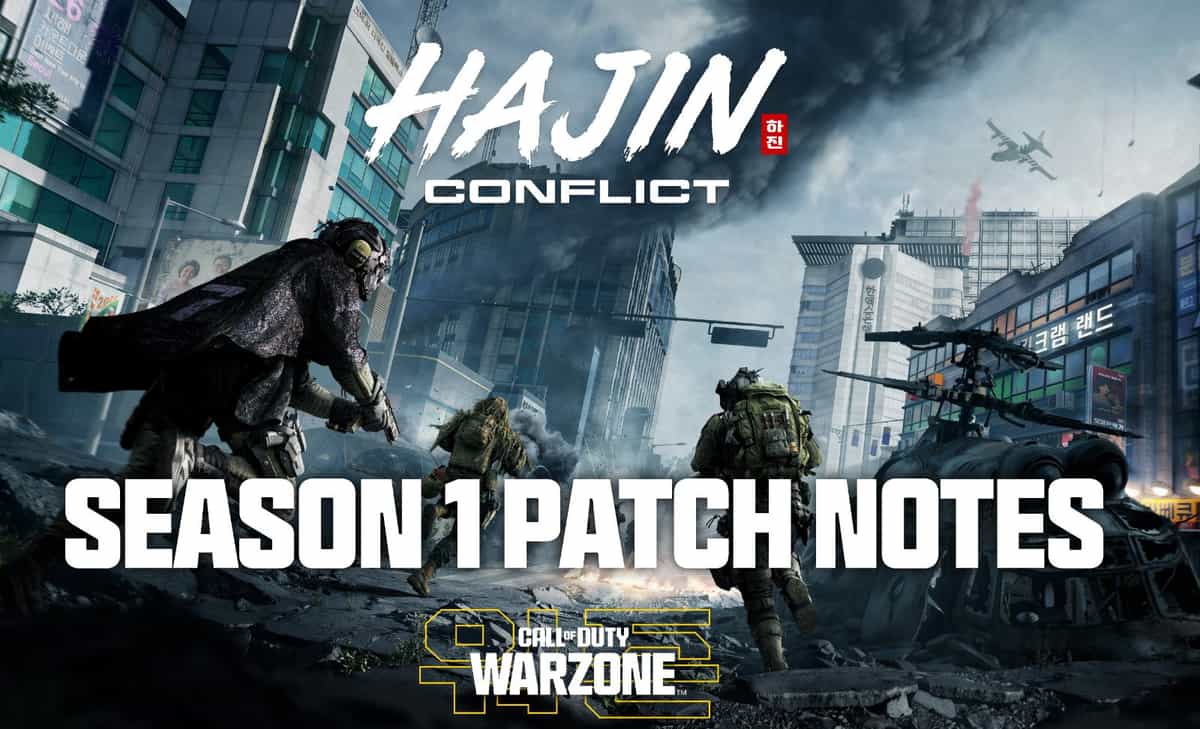
Call of Duty: Warzone Season 1 arrives on November 6, bringing far more than two new maps and the integration of Modern Warfare 4. The update introduces significant changes to movement, weapon handling, loadout customization, Perks, Buy Stations, and the pace of Battle Royale and Resurgence matches.
While Hajin and Zodiac are the most visible additions, the detailed Season 1 patch notes reveal several adjustments that could have an immediate impact on how players approach gunfights, manage their equipment, and spend Cash.
Here's a closer look at the changes that matter most, based on the Season 1 patch notes and the official Call of Duty Season 1 briefing.
Tactical Sprint Returns Alongside Major Movement Improvements
One of the most important gameplay changes is the return of Tactical Sprint as a default movement mechanic.
Players will no longer need a specific Perk to access it. Tactical Sprint provides approximately 0.5 meters per second of additional speed, depending on the equipped weapon, and can last up to four seconds with full stamina.
Equipping a melee weapon also allows unlimited Tactical Sprint without consuming stamina.
The update includes several additional movement improvements:
- Sliding: The cooldown between consecutive slides has been reduced by 400 milliseconds.
- Slide-to-Jump: The transition delay has been reduced by 200 milliseconds, with a smaller jumping height penalty.
- ADS Sliding: The movement distance penalty while aiming down sights has been removed.
- Jumping: The consecutive jump slowdown window has been reduced by 150 milliseconds.
- Slide-to-Fire: Responsiveness has been improved.
- Parachuting: Players lose less momentum when landing.
- Ascenders: Dismount speed has been increased.
These adjustments target the time players spend transitioning between movement actions.
The removal of the slide-to-sprint delay is particularly relevant during close-range engagements, where players frequently combine sliding, repositioning, and sprinting to escape enemy fire or challenge opponents from unexpected angles.
However, faster movement does not automatically make every aggressive playstyle more effective. Weapon handling, positioning, and the ability to maintain accuracy remain important considerations.
Hajin and Zodiac Introduce Two Different Combat Environments
Season 1 launches with two new Warzone maps, each designed around a different experience.
Hajin is the new large-scale Battle Royale map, featuring 13 major Points of Interest across North and South Korea.
Its environments range from dense urban districts and industrial facilities to farmland, rivers, and mountainous terrain.
The map also introduces six possible weather scenarios, randomly selected at the beginning of each match. These include clear conditions, heavy winds, intermittent rainfall, and an intensifying storm.
A new Gulag features two arena variants with different obstacle layouts, mantling opportunities, and weather conditions.
Zodiac, meanwhile, is the new Resurgence map set around the DRC Advanced Systems drone manufacturing headquarters.
It features 10 Points of Interest, combining industrial interiors, rooftops, underground passages, and moving trains.
Following Beta feedback, the developers have improved operator visibility, footstep audio, and loot readability. Train spawn rates have also been reduced by approximately 25% to address the availability of high-tier loot.
The distinction between the two maps matters for loadout selection. Hajin offers a wider variety of engagement distances, while Zodiac's industrial layout creates more opportunities for fighting around buildings, corridors, and elevated positions.
Resurgence Matches Become Shorter and Redeployment Gets New Options
Season 1 also changes the pacing of Resurgence.
According to the supplied patch notes, adjustments to Gas Circle timings reduce overall match duration by nearly five and a half minutes compared with the previous chapter.
The intention is to reduce downtime during the middle stages of matches and bring remaining squads into engagements more quickly.
Another important addition is Drop Kits, a new category of consumable loot available exclusively in Resurgence.
Four variants are being introduced:
- Insured Drop Kit: Redeploy faster while retaining all accumulated Cash.
- Armored Drop Kit: Return with full Armor, additional Armor Plates, and a Self-Revive Kit.
- Loadout Drop Kit: Redeploy with your current Loadout.
- Radar Drop Kit: Return with an active Radar Ping, UAV, and Supply Sweep.
Only one Drop Kit can be equipped at a time, and it is consumed upon redeployment.
These items create different recovery options depending on a squad's situation.
For example, the Loadout Drop Kit allows players to retain their selected weapons after returning to the match, potentially reducing the need to recover equipment from a contested location.
The Insured Drop Kit, by comparison, prioritizes Cash retention, which may be more useful when a squad needs resources for Buy Station purchases.
Modern Warfare 4 Adds 33 Weapons, but Legacy Loadouts Have Restrictions
The full integration of Modern Warfare 4 brings all 33 launch weapons into Warzone, alongside additional weapons arriving throughout Season 1.
Two new weapons are included in the Season 1 Battle Pass:
- Cronen Osprey: A 5.56 assault rifle available at Battle Pass Tier 16.
- CSG-35: A high-fire-rate SMG available at Battle Pass Tier 36.
Modern Warfare 4 weapons support the updated Gunsmith experience, Weapon Prestige, Apex Attachments, and Warzone-specific Mastery Camos.
Older Call of Duty weapons are not disappearing, but their functionality is changing.
Weapons and Blueprints from previous supported titles will remain accessible through the Legacy tab in the Loadout menu.
However, Legacy Weapons will use predefined configurations and cannot be modified through Gunsmith.
They also will not support Modern Warfare 4 Mastery Camos, reticle challenges, cosmetic Gunsmith customization, or build sharing.
This is an important distinction for players who rely on older weapon configurations.
Previously established attachment combinations will not necessarily be reproducible through the new Legacy system. Players looking for complete control over their weapon builds will need to use the supported Modern Warfare 4 arsenal.
The patch notes also describe broader weapon-handling adjustments, including reduced visual recoil effects, less weapon shake, improved bullet velocity, faster weapon swapping, and increased movement speed while aiming down sights.
These are general gameplay adjustments, not sufficient evidence to declare a new weapon meta before launch performance can be assessed.
Weapon Augments Add Another Layer of Loadout Customization
One of Season 1's more interesting weapon systems operates outside the traditional Gunsmith.
Weapon Augments are upgrades that players can acquire during matches to improve an equipped weapon's performance.
Unlike standard attachments, Augments are obtained during gameplay and provide additional benefits after a weapon has already been selected.
Three types of bonuses are described in the Season 1 material:
- Close-range performance: Improved ADS speed, sprint-to-fire responsiveness, hipfire control, and movement while aiming.
- Long-range performance: Improved bullet velocity, damage range, horizontal recoil control, and aiming stability.
- General handling: Faster reloads, improved rechambering, reduced flinch, and better weapon responsiveness.
Only one Augment can be equipped on a weapon at a time.
Once applied, it remains associated with that weapon even if the player drops it.
This creates an important distinction between building a weapon before deployment and improving it during a match.
A configuration designed for long-distance engagements, for example, may benefit from an Augment that reinforces its existing characteristics.
However, the effectiveness of any combination will depend on the weapon's actual performance and the bonuses available in the live game.
Elite Perks and Buy Station Upgrades Change the In-Match Economy
Season 1 introduces a revised Perk system featuring 15 Base Perks across three traditional Loadout slots.
It also adds a fourth slot reserved for Elite Perks, which must be acquired during matches.
Three Elite Perks are available at launch:
- Athleticism: Improves movement while strafing, crouching, and aiming, while reducing ADS penalties during jumping and sliding.
- Fieldcraft: Accelerates Armor and Equipment regeneration.
- Phantom: Reduces detection by enemy reconnaissance systems, including standard UAVs, without requiring constant movement.
Players can equip only one Elite Perk at a time.
Their acquisition is also tied to the revised Buy Station economy.
Completing a Supply Run Contract now upgrades the targeted Buy Station, unlocking additional purchase options for every squad for the remainder of the match.
The announced inventory includes Elite Perks, specialized equipment, and high-value purchases such as Specialist.
Mobile Buy Stations, introduced through the Fly Buy Public Event, offer a separate inventory that includes Weapon Augments and other powerful equipment.
As a result, Cash management becomes more closely connected to long-term equipment progression.
Instead of spending resources exclusively on Loadouts, UAVs, and teammate redeployments, squads will have additional opportunities to improve their existing weapons and Perk combinations.
The decision to complete a Supply Run Contract may therefore benefit not only the squad undertaking it but also competing teams that subsequently use the upgraded station.
Loot Changes and Interactive Objects Create New Tactical Options
Warzone's loot economy has also been revised.
In Battle Royale, the number of active High Value Loot Zones has been reduced from three to one per match.
These locations are randomized and feature valuable rewards, including a chance to acquire Specialist.
Concentrating valuable resources in fewer locations could make those areas more contested, although actual landing patterns will depend on player behavior.
Season 1 also introduces movable environmental objects, identifiable by an X marking.
These include dumpsters, concrete cylinders, wooden boxes, fuel barrels, and other objects that can be repositioned to create cover, block routes, or establish traps.
The new physics-based interactions are particularly relevant on maps where players must cross exposed areas or defend narrow entrances.
In addition, Ground Ops introduce optional objectives that reward players for interacting with specific locations and equipment around the map.
These systems expand the ways squads can acquire resources without relying exclusively on traditional Contracts and Supply Boxes.
Rally Point Offers a Different Way to Play Warzone
Season 1 introduces Rally Point, a new 20-player mode set on Zodiac.
Unlike traditional Battle Royale and Resurgence, Rally Point features no closing Gas Circle and allows unlimited redeployments.
Players can enter and leave the experience, complete objectives, fight hostile soldiers, and accumulate Cash without the same elimination pressure found in standard Warzone matches.
The mode also includes designated Neutral Grounds, where players can change Loadouts, redeploy, collect payouts, and form squads.
A single Nuke can be purchased during each match, with availability determined on a first-come, first-served basis.
Rally Point includes exclusive rewards consisting of one Weapon Blueprint and two Weapon Camos.
For players learning the new movement mechanics, weapons, and equipment systems, its more flexible structure provides an alternative to repeatedly entering standard matches.
Nintendo Switch 2 Support Arrives as PS4 and Xbox One Support Ends
Season 1 also marks a significant platform transition.
Warzone launches on Nintendo Switch 2 alongside the Modern Warfare 4 integration.
At the same time, support for PlayStation 4 and Xbox One ends with the start of Season 1.
Players moving to a supported platform can continue their progression by signing in with the same linked Activision account.
Private Matches will also be unavailable throughout Season 1, with their return scheduled for Season 2 alongside expanded customization options.
What Players Should Prioritize When Season 1 Launches
Season 1's changes affect several interconnected gameplay systems rather than just introducing additional content.
Players who plan to focus on Battle Royale should become familiar with Hajin's terrain, weather conditions, revised Buy Station economy, and movement adjustments.
Resurgence players have a different set of priorities, particularly the shorter match structure, Drop Kits, and Zodiac's compact environment.
For anyone primarily interested in weapon builds, the distinction between fully customizable Modern Warfare 4 weapons and preset Legacy Weapons is essential.
Weapon Augments also mean that a Loadout's effectiveness may depend partly on upgrades acquired after deployment.
The full consequences for weapon balance will only become clear once the Season 1 update is live and there is enough reliable gameplay evidence to compare different setups.
Call of Duty: Warzone Season 1 launches November 6, 2026, introducing the Modern Warfare 4 integration across supported platforms.