Warzone Season 1 introduces major changes to weapon ballistics, increasing hitscan range by 288% and reducing bullet travel time by 34ms. Here's how the update affects gunfights and loadouts.
Call of Duty: Warzone has received a significant change to its weapon ballistics system, with Raven Software confirming a substantial increase in hitscan distance and faster bullet travel beyond that range.
The November 11, 2026, Season 1 update applies improvements originally announced by Infinity Ward for Modern Warfare 4, targeting weapon responsiveness and the consistency of gunfights across different engagement distances.
Unlike a conventional weapon balance patch, these adjustments affect all ballistic weapons in Warzone, rather than a specific assault rifle, SMG, or sniper rifle.
Warzone hitscan range increased to approximately 35 meters
According to the official Warzone Season 1 patch notes, the latest update increases the true hitscan distance of ballistic weapons by approximately 3.91 times compared with their launch behavior.
The developers report that the average hitscan range now extends to approximately 35 meters, representing an increase of roughly 288% from launch.
The distinction matters because hitscan and simulated ballistics determine how the game handles bullets at different distances.
Within a weapon's true hitscan range, shots register without the projectile travel delay associated with the game's ballistic simulation. Beyond that distance, bullet velocity, travel time, and trajectory become relevant.
Modern Warfare 4 originally introduced a higher-resolution ballistic simulation designed to improve accuracy when tracking moving targets at longer distances. However, that system also reduced the initial hitscan range of weapons, creating an unintended trade-off in shorter engagements.
The new adjustment addresses that limitation while retaining the improved ballistic simulation at greater distances.
For Warzone players, the intended result is more immediate hit registration in close- and medium-range encounters without removing projectile travel mechanics from longer-range combat.
Long-range bullets now connect 34 milliseconds faster
The update also introduces a new technique for simulating bullets traveling beyond hitscan distance.
According to the developers, the revised system reduces the time ballistic bullets take to connect by 34 milliseconds.
This adjustment is particularly relevant to assault rifle engagements at medium and long distances, where projectile travel time can influence how far ahead of a moving opponent players need to aim.
The improvement is designed to make those engagements feel more consistent, particularly when tracking targets moving across open areas.
However, the 34-millisecond reduction should not be confused with a universal reduction in weapon time-to-kill (TTK).
The patch notes do not announce corresponding increases to weapon damage, fire rate, or damage range. They also do not establish that any individual weapon has become statistically stronger than its competitors.
The main change concerns how quickly shots connect, rather than how much damage they inflict.
What the ballistic changes mean for Warzone loadouts
The global adjustment has practical implications for players evaluating their existing weapon configurations.
With true hitscan extending farther than it did at launch, engagements within approximately 35 meters should benefit from more responsive shot registration. The exact hitscan threshold can still vary between weapons, as the developers describe 35 meters as an average.
At longer distances, projectile behavior remains important. Bullet velocity and the ability to track moving targets therefore remain relevant considerations when selecting attachments.
Three distinctions are worth keeping in mind:
Close-range weapons: The expanded hitscan distance is intended to make nearby gunfights more responsive, without changing the underlying damage statistics.
Assault rifles: Medium- and long-range engagements should benefit from reduced projectile travel delays, potentially making moving targets easier to track consistently.
Long-range configurations: Ballistic simulation still applies beyond hitscan distance, so attachments affecting projectile behavior should not automatically be considered unnecessary.
These changes do not provide sufficient evidence to establish a new Warzone weapon ranking or recommend replacing existing loadouts.
Players comparing builds should continue to consider recoil control, handling, damage range, and other documented weapon characteristics rather than assuming that the ballistic improvements favor one weapon category.
Rally Point changes and additional Warzone fixes
The November 11 update also includes several adjustments outside the weapon system.
In Rally Point, Raven Software has increased the probability of the Special Delivery Drone appearing while slightly reducing how long it remains on the map.
Additional Player XP and Weapon XP adjustments have also been implemented across multiple modes to bring progression rewards in line with their intended values.
The update addresses several gameplay and interface problems, including:
Fixed an issue preventing players from equipping pre-order weapon camos in Warzone.
Removed a noticeable delay when attempting to use newly collected Equipment and Killstreaks.
Corrected an issue displaying the wrong mode name and icon in Casual Battle Royale match summaries.
Fixed weapon menu visibility problems affecting locked Legacy weapons.
Prevented Multiplayer-only Weapon Information and Equipment Information settings from incorrectly applying to Warzone.
Fixed a Weapon Prestige issue that relocked ammunition attachments on owned Blueprints.
The equipment delay fix is especially relevant during active matches, where players may need to deploy newly acquired items immediately after looting.
A global weapon-system improvement, not a traditional balance patch
The most important distinction in the November 11 update is that Raven Software has changed Warzone's underlying ballistic behavior rather than announcing individual weapon buffs or nerfs.
The expanded hitscan range addresses responsiveness at shorter distances, while the revised long-range simulation reduces projectile travel delays without abandoning the more detailed ballistic system introduced with Modern Warfare 4.
For players, the immediate benefit is a more consistent foundation for gunfights across different distances.
Whether these improvements influence preferred loadout configurations will depend on the characteristics of individual weapons and their performance under the updated system, rather than the global adjustment alone.
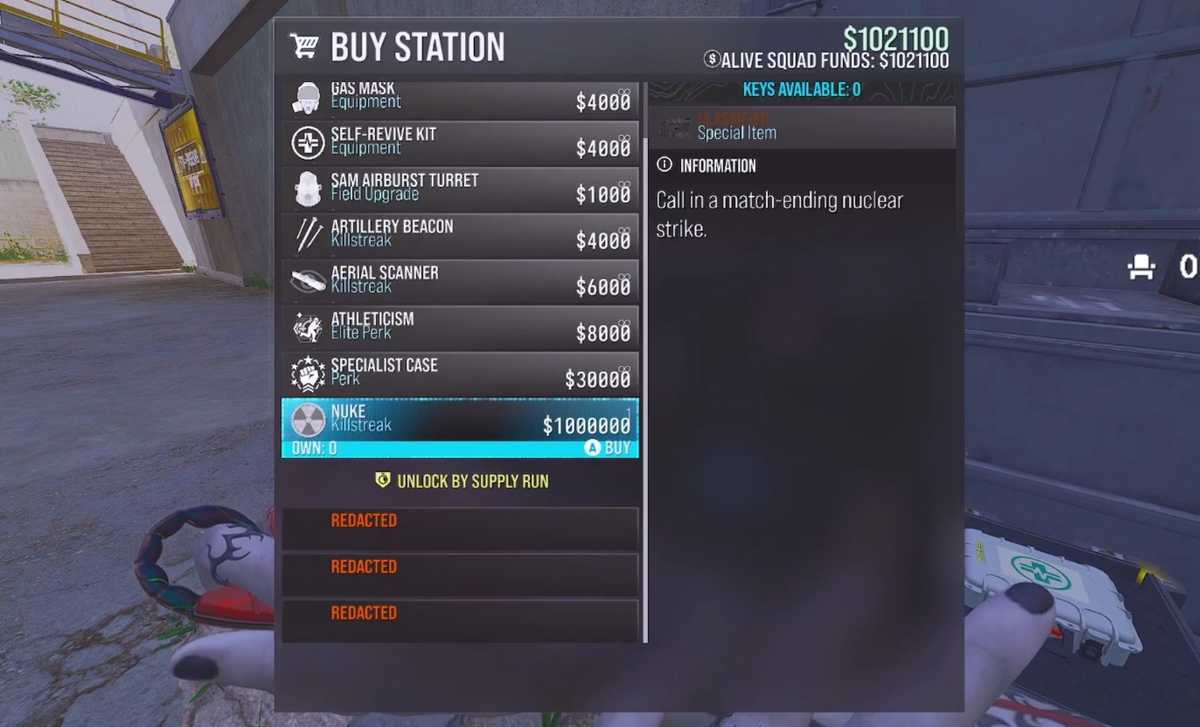
Warzone Season 1 lets players purchase a Tactical Nuke for $1 million in Rally Point. Here's how the new mechanic works and what rewards you can unlock.